How America's Thanksgiving Bird Got a Reputation for Being Dumber Than a Rock
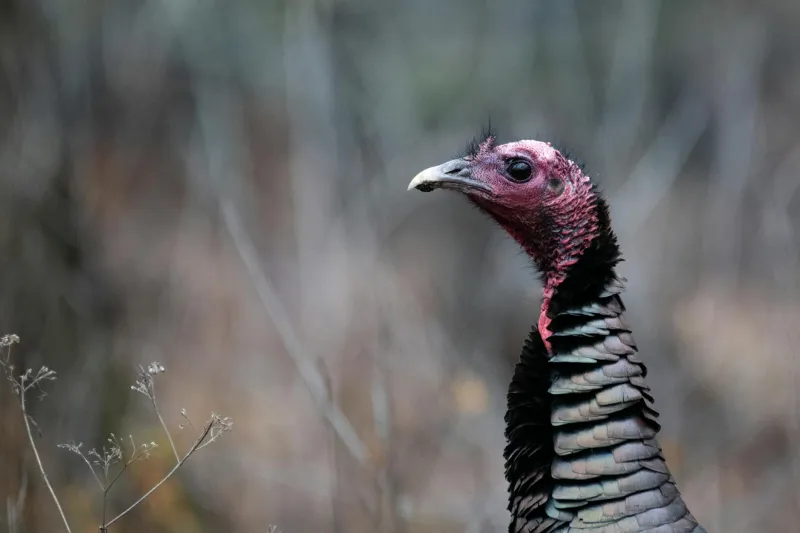
The Myth That Stuck
Every November, as Americans prepare to carve into their Thanksgiving centerpiece, someone inevitably shares the "fact" that turkeys are so monumentally stupid they'll drown by looking up at falling rain with their mouths open. It's become as much a part of holiday tradition as cranberry sauce and family arguments about politics.
The story feels plausible enough. After all, domestic turkeys do seem pretty dopey compared to other farm animals. They're awkward, slow-moving, and appear to lack the street smarts of chickens or the problem-solving abilities of pigs. Surely a bird that looks that vacant could be dumb enough to accidentally drown itself during a rainstorm.
Except wildlife biologists, turkey farmers, and anyone who's actually observed these birds in natural settings will tell you the same thing: it's complete nonsense.
What Turkey Experts Actually Know
Dr. Tom Hughes, who spent decades studying wild turkeys for state wildlife agencies, puts it bluntly: "I've never seen a turkey drown in the rain, and I've been studying these birds for 30 years. It's one of those myths that sounds just believable enough that people keep repeating it."
 Photo: Dr. Tom Hughes, via management.clinictor.com
Wild turkeys are actually considered remarkably intelligent by bird standards. They have complex social hierarchies, sophisticated communication systems, and impressive memories for territory and food sources. They can recognize dozens of individual flock members and remember the locations of reliable feeding areas across seasons.
Most impressively, wild turkeys survived centuries of intensive hunting pressure from humans armed with increasingly sophisticated weapons. A truly stupid animal doesn't adapt and thrive under that kind of evolutionary pressure.
The Real Story of Domestic vs. Wild Turkeys
So where did the stupidity reputation come from? The answer lies in understanding the difference between the wild turkeys that roam American forests and the domestic turkeys that end up on dinner tables.
Commercial turkey breeding over the past century has focused almost exclusively on rapid weight gain and meat production. The broad-breasted white turkeys raised on farms have been selectively bred to grow so large, so quickly, that their bodies can barely support their own weight.
These birds do have genuine health and mobility problems. They can't fly, they struggle to mate naturally, and they're prone to heart attacks and leg injuries. But these issues stem from genetic modifications for meat production, not inherent stupidity.
"It's like judging human intelligence based on observing people who are severely physically disabled," explains Dr. Sarah Johnson, an animal behavior specialist. "The problems you see in commercial turkeys are physical, not cognitive."
 Photo: Dr. Sarah Johnson, via www.derkardiologe.at
How Agricultural Reality Became Species Mythology
The transformation from "these particular farm-bred turkeys have health problems" to "all turkeys are incredibly stupid" happened gradually through cultural telephone. Farmers dealing with the practical challenges of managing large, clumsy domestic birds began describing them as "dumb," meaning difficult to work with rather than literally unintelligent.
These observations got passed along, embellished, and eventually crystallized into specific stories like the rain-drowning myth. The tale has all the elements of a good urban legend: it's specific enough to sound credible, absurd enough to be memorable, and confirms existing assumptions about an animal most people rarely encounter in the wild.
The Intelligence of Wild Turkeys
Anyone who's tried to hunt wild turkeys can attest to their intelligence. These birds are notoriously difficult to outsmart, with excellent eyesight, acute hearing, and sophisticated survival instincts. They can distinguish between threatening and non-threatening human activities, learn to avoid areas where they've encountered danger, and adapt their behavior based on seasonal changes and food availability.
Wild turkeys also demonstrate complex social behaviors. They form hierarchical flocks with established pecking orders, engage in elaborate courtship rituals, and communicate through a variety of calls that convey different types of information about food, danger, and social status.
Mother turkeys are particularly impressive, teaching their young where to find food, how to recognize predators, and when to take flight. Turkey poults learn quickly and retain information about their environment throughout their lives.
Why the Myth Persists
The "stupid turkey" stereotype persists partly because most Americans only encounter domestic turkeys, either on farms or as processed meat. Wild turkeys have made a remarkable comeback from near-extinction in the early 1900s, but they're still not common enough for most people to observe their natural behaviors.
The myth also serves a psychological function around Thanksgiving. Believing that turkeys are unintelligent makes it easier to feel comfortable about eating them. It's more pleasant to think you're consuming a bird that was too dumb to live than to acknowledge you're eating an intelligent, social animal that was specifically bred for your dinner table.
Setting the Record Straight
The next time someone shares the rain-drowning story at your holiday table, you can confidently correct them. Wild turkeys are intelligent, adaptable birds that have successfully navigated millions of years of evolution and centuries of human hunting pressure.
The domestic turkeys that become Thanksgiving dinner do face genuine welfare challenges, but these stem from intensive breeding for rapid growth, not cognitive deficits. Understanding this distinction doesn't have to ruin anyone's holiday meal, but it does give us a more accurate picture of the remarkable birds that Benjamin Franklin once proposed as America's national symbol.
 Photo: Benjamin Franklin, via cdn.britannica.com
As Dr. Hughes puts it: "If turkeys were really as stupid as people claim, they would have gone extinct long ago. The fact that they're thriving in the wild tells you everything you need to know about their actual intelligence."