Dog Trainers Built an Empire on Wolf Research That the Scientists Themselves Disowned Decades Ago

The Study That Started It All
In the 1940s, animal behaviorist Rudolph Schenkel published research on wolf behavior that would shape how Americans trained their dogs for the next 70 years. His observations of wolves in captivity led to the now-famous concept of the "alpha wolf" — a dominant pack leader who maintained order through aggression and intimidation.
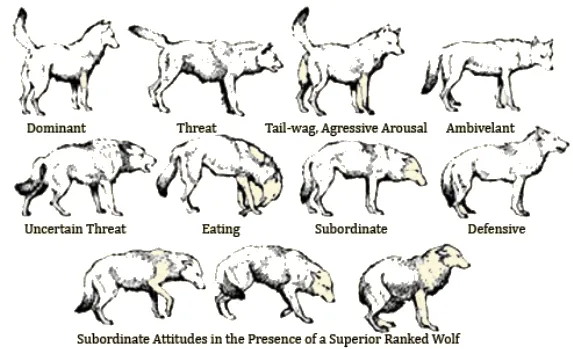 Photo: Rudolph Schenkel, via media.dogtraining.world
The problem? Those wolves weren't acting naturally at all.
Schenkel's subjects were unrelated adult wolves from different locations, thrown together in small enclosures at zoos. It was the equivalent of studying human family dynamics by locking strangers in a prison cell and watching them fight for resources.
How Prison Wolves Became Parenting Advice
The alpha wolf theory exploded in popularity during the 1970s when wildlife biologist L. David Mech wrote a book called "The Wolf: Ecology and Behavior of an Endangered Species." Mech's work, heavily influenced by Schenkel's captivity studies, painted wolves as creatures locked in constant power struggles.
Dog trainers seized on this research. If dogs descended from wolves, and wolves lived in dominance hierarchies, then pet owners needed to establish themselves as the "pack leader." Training methods like alpha rolls (forcing dogs onto their backs), eating before your dog, and walking through doorways first became gospel in the pet industry.
Cesar Millan's "Dog Whisperer" brought these techniques to millions of American living rooms. The show's central premise — that dogs needed a calm, assertive "alpha" — was built entirely on those flawed captivity studies.
 Photo: Cesar Millan, via www.unitedcardevents.com
The Scientist Who Spent Decades Saying "I Was Wrong"
Meanwhile, L. David Mech was having second thoughts. In the 1980s, he began studying wolves in their natural habitat in Minnesota and Alaska. What he found completely contradicted his earlier work.
Wild wolf packs aren't dominance hierarchies at all. They're families.
The "alpha" wolves Mech observed in the wild were simply parents. The "beta" wolves were their offspring. There was no fighting for dominance because the pack structure was based on age and kinship, not strength or aggression.
"The concept of the alpha wolf is particularly misleading," Mech wrote in a 1999 paper. "Alpha implies competition, while the natural wolf pack is a family where the parents are naturally the leaders."
Mech spent the next two decades trying to correct the record. He published new research, gave interviews, and even requested that his original book be taken out of print. The International Association of Animal Behavior Consultants officially rejected dominance-based training methods in 2009.
Why the Myth Won't Die
Despite overwhelming scientific evidence, alpha dog training methods remain popular. Walk into any pet store and you'll find books promising to help you "be the pack leader" or "think like a dog."
The persistence of this myth reveals something deeper about American culture. We're drawn to simple explanations for complex behaviors. The idea that dogs need firm leadership appeals to our desire for control and order.
The pet industry also has financial incentives to keep the myth alive. Dominance-based training often creates more behavioral problems than it solves, leading to repeat customers for trainers and behaviorists.
What Actually Works
Modern animal behavior research supports positive reinforcement training — rewarding good behavior rather than punishing bad behavior. This approach is based on decades of learning theory research, not discredited wolf studies.
Dogs don't see humans as fellow pack members who need to be dominated. They see us as a completely different species that provides food, shelter, and companionship. The most effective training builds on that relationship through trust and communication, not intimidation.
The Real Lesson
The alpha dog myth reveals how scientific misconceptions can persist long after being debunked by the very researchers who discovered them. Mech's original work wasn't fraudulent — it was simply based on artificial conditions that didn't reflect natural behavior.
The tragedy is that millions of dogs and their owners suffered through training methods that were not only ineffective but often harmful. Dominance-based training can increase anxiety and aggression in dogs, creating the very problems it claims to solve.
Next time someone tells you that your dog is "trying to dominate" you, remember that this idea comes from watching stressed wolves in captivity, not from any understanding of how dogs actually think. The scientist who started it all spent the last 30 years of his career trying to set the record straight.