Carpe Diem Had a Twitter Account Long Before Twitter Existed

When Drake dropped the phrase "you only live once" on his 2011 track "The Motto," it spread across the internet like a lit fuse. Within months, YOLO was everywhere — on bumper stickers, tattooed on forearms, used to justify everything from skydiving to ordering dessert on a Tuesday. The cultural conversation treated it like a fresh invention, something uniquely millennial, maybe even a little reckless.
But here's the thing: the idea itself is ancient. Embarrassingly ancient. Like, toga-wearing, Senate-debating, aqueduct-building ancient.
What People Think YOLO Is
The popular read on YOLO is that it's a product of social media culture — a philosophical permission slip for impulsive behavior dressed up as motivation. Critics framed it as generational shallowness. Supporters saw it as a rallying cry against overthinking. Either way, most people treated it as something that arrived with smartphones.
And that assumption is where the real story gets interesting.
Rome Already Had This Figured Out
The Roman poet Horace wrote carpe diem — "seize the day" — around 23 BCE. The full line, from his Odes, translates roughly as: "Seize the day, put little trust in tomorrow." He wasn't being reckless. He was making a philosophical point about mortality, uncertainty, and the human tendency to defer living until some imagined future moment that may never arrive.
 Photo: Horace, via c8.alamy.com
That's not a Drake lyric. That's a 2,000-year-old observation about the human condition.
But Horace wasn't even working from scratch. He was drawing on Epicurean philosophy, which had been circulating for centuries before him. Epicurus, the Greek philosopher who lived around 300 BCE, taught that the goal of life was to find genuine pleasure and avoid unnecessary suffering — and that obsessing over an uncertain future was one of the fastest routes to a miserable present. His followers weren't hedonists in the modern sense. They were people trying to live well in the time they actually had.
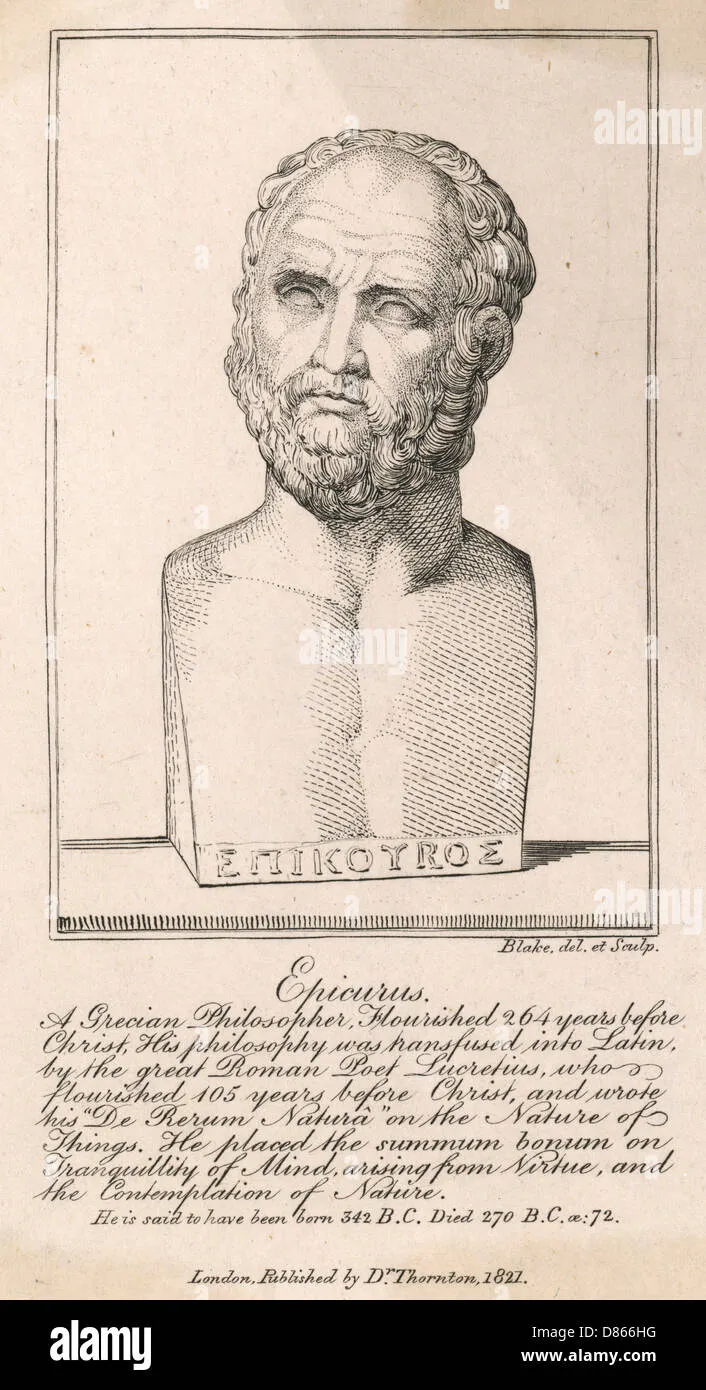 Photo: Epicurus, via c8.alamy.com
Even earlier, the ancient Egyptians produced texts encouraging people to enjoy earthly life while they could. The idea of seizing the present moment isn't millennial. It might be one of the oldest recurring themes in human thought.
Why Every Generation Rediscovers It
So why does each era act like it's stumbling onto something new?
Part of the answer is that the anxiety driving the philosophy never goes away. Humans have always struggled with mortality, uncertainty, and the gap between the life they're living and the life they imagine. When that anxiety peaks — during youth, during cultural upheaval, during periods of rapid change — the "seize the moment" idea resurfaces with fresh urgency.
The 1960s counterculture had its own version: "live in the now" became a near-spiritual directive, tied to Eastern philosophy and a rejection of postwar conformity. The 1980s produced "live fast, die young" as a rock-and-roll ethos. The 1990s gave us self-help books telling readers to embrace the present. Each generation absorbed the same essential idea and filtered it through its own cultural vocabulary.
Social media didn't create YOLO. It just gave the philosophy a hashtag and an audience of millions.
The Part That Usually Gets Left Out
Here's what tends to get lost in translation: the ancient philosophers who championed living in the present weren't endorsing impulsiveness. Horace's carpe diem was paired with quam minimum credula postero — "trust as little as possible in tomorrow." That's not "do whatever feels good right now." It's closer to "don't spend your whole life waiting for a future that isn't guaranteed."
Epicurus specifically warned against the kind of short-term pleasures that create long-term suffering. His version of seizing the moment involved friendship, reflection, simple pleasures, and freedom from unnecessary anxiety — not maxing out a credit card or jumping off a cliff for Instagram.
The modern YOLO interpretation stripped out a lot of that nuance. What survived was the permission slip. What got dropped was the philosophical framework.
Why the Myth Persists
There's a certain appeal to believing that your generation invented something. It makes a cultural moment feel more significant, more original. Social media accelerated this by compressing time — a phrase that goes viral in 2011 feels brand new even if the sentiment behind it predates the Roman Empire.
There's also the fact that philosophy doesn't trend well. "Epicurus warned against deferring happiness in favor of an uncertain future" doesn't fit on a bumper sticker. "YOLO" does.
And honestly, the underlying anxiety that produces these moments is so universal that each generation genuinely does rediscover it for themselves. The experience of being young, uncertain, and aware of your own mortality is not something you can fully inherit from someone else. You feel it fresh. The philosophy just puts language to something you were already sensing.
The Takeaway
YOLO isn't a millennial invention. It's a millennial translation of something humanity has been wrestling with since at least the third century BCE. The impulse to seize the present, to stop deferring life, to resist the anxiety of an uncertain future — that's not a social media trend. It's one of the oldest philosophical questions there is.
Next time someone rolls their eyes at a YOLO caption, remind them that Horace was writing the same thing before the Roman Colosseum was even built. We just gave it a shorter hashtag.
 Photo: Roman Colosseum, via www.findingtheuniverse.com