How a Single College Study About Mozart Sparked a Baby Genius Industry Worth Millions
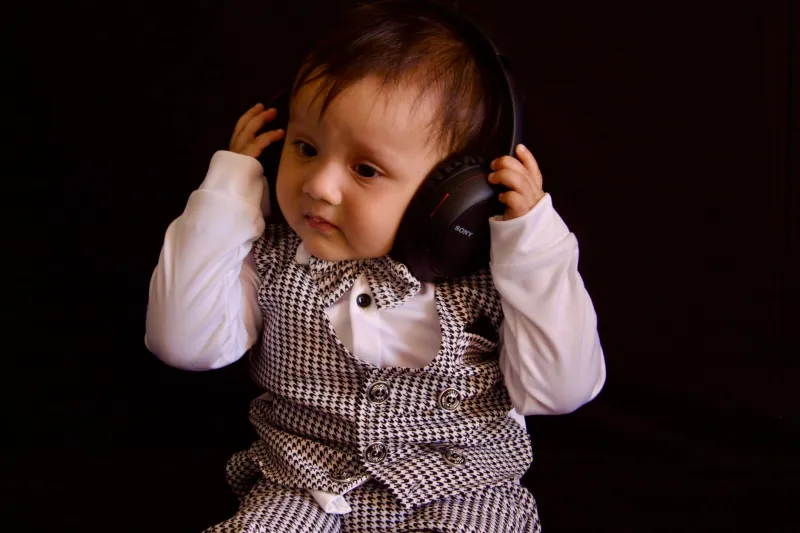
The Study That Launched a Thousand Baby CDs
In 1993, a team of researchers at UC Irvine published a study in the journal Nature with a fairly narrow finding: college students who listened to ten minutes of Mozart before taking a spatial reasoning test scored slightly higher than students who sat in silence or listened to a relaxation tape. The effect lasted roughly 10 to 15 minutes.
 Photo: UC Irvine, via x.nishadilcdn.com
That's it. That was the whole study.
By the late 1990s, that same finding had been repackaged into a multi-million dollar industry of infant CDs, educational toys, and "Baby Einstein" videos. Florida passed a law requiring state-funded childcare centers to play classical music daily. Georgia's governor proposed including a classical music CD in every newborn's hospital discharge package. A generation of American parents became convinced that playing Beethoven to a sleeping infant was essentially giving their child a head start on an Ivy League application.
 Photo: Baby Einstein, via img1.wikia.nocookie.net
The science was real. The leap from that science to what parents were sold was enormous.
What the Original Researchers Actually Said
The phrase "Mozart Effect" was coined not by the scientists themselves but by a journalist. Dr. Frances Rauscher, one of the study's lead authors, has spent years trying to walk back the cultural avalanche her research accidentally triggered.
 Photo: Dr. Frances Rauscher, via www.hausarztpraxis-rausch.de
Rauscher's study never involved infants. It never claimed to produce lasting intelligence gains. It measured one specific type of spatial reasoning — the kind used to mentally fold and rotate paper shapes — and the improvement disappeared within minutes. The researchers were careful about their conclusions. The press was not.
In follow-up interviews, Rauscher repeatedly clarified that her team had never suggested parents play Mozart to babies. She said the leap from "college students briefly performed better on one spatial task" to "classical music makes babies smarter" was not supported by her work. A 1999 review by Harvard psychologist Christopher Chabris analyzed 16 studies and found the effect was tiny, inconsistent, and almost certainly not specific to Mozart — any stimulating audio might produce a comparable short-term bump.
The science community largely moved on. The marketing industry did not.
How a Myth Gets Built
The story of the Mozart Effect is a near-perfect case study in how a real finding becomes a cultural myth. Several forces combined to make it unstoppable.
First, the original result was genuinely interesting and easy to summarize. "Mozart makes you smarter" fits in a headline. The nuances — temporary effect, adult subjects, narrow task, unreliable replication — do not.
Second, it arrived at exactly the right cultural moment. The early 1990s saw an explosion of popular interest in early childhood brain development, partly driven by legitimate neuroscience showing that the first years of life are critical for cognitive wiring. Parents were primed to believe that what happened in the crib mattered enormously. A simple, actionable intervention — just press play — felt like a gift.
Third, and most importantly, someone figured out how to sell it. The Baby Einstein company launched in 1997, built on the premise that developmentally enriching media could accelerate infant learning. Disney acquired it in 2001. By 2003, Baby Einstein videos were in roughly a third of American homes with infants under two. The product line eventually generated over $200 million in annual revenue.
In 2007, the American Academy of Pediatrics reiterated its guidance that screen time for children under two had no demonstrated educational benefit. A 2009 study found that Baby Einstein videos were actually associated with slower vocabulary development in some age groups. Disney quietly offered refunds.
What Music Actually Does for Developing Brains
Here's where it gets genuinely interesting — because music isn't useless for children. The real story is just more complicated than a shortcut to genius.
Research consistently shows that active musical training — learning to play an instrument, singing with a group, clapping along to rhythms — produces measurable cognitive benefits in children. Studies suggest that kids who receive music education show improvements in phonological awareness, which supports reading development, and in certain aspects of executive function. These are real effects, supported by solid evidence.
The key word is active. Passively listening to Mozart while you sleep or play on the floor doesn't appear to produce the same results. The brain benefits from engagement, not background audio.
Singing to your baby, clapping games, nursery rhymes, and interactive musical play all have legitimate developmental value — not because Mozart's specific frequencies rewire neural pathways, but because they involve attention, repetition, social bonding, and language exposure. Those things matter. The CD playing in the corner while no one is paying attention probably doesn't.
The Takeaway
The Mozart Effect wasn't a hoax. It was a real, peer-reviewed finding that got stretched far beyond what the evidence could support. Parents who bought those CDs weren't gullible — they were responding to a message that felt scientifically credible and emotionally compelling. The mistake wasn't caring about their children's development. The mistake was trusting a marketing claim that had quietly outrun its source material.
If you want to support a child's brain development through music, the research points toward participation over passive listening. Sing off-key. Bang on pots. Sign them up for a music class when they're old enough. That's not as elegant as pressing play on a classical playlist, but it's what the science actually supports.