How a Single College Study Convinced Millions of Parents to Wire Their Babies for Classical Music
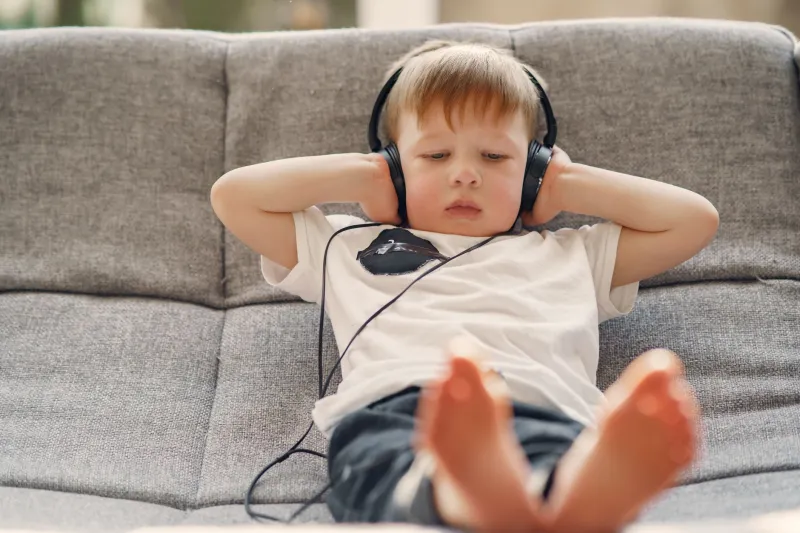
If you were born between roughly 1993 and 2005, there's a decent chance your parents played Mozart at you before you could walk. Maybe through a portable speaker propped near your crib. Maybe through foam headphones pressed against your mother's pregnant belly. Maybe through a Baby Einstein DVD that your parents treated less like entertainment and more like an academic head start.
They weren't doing it because it felt nice. They were doing it because they genuinely believed it would make you smarter. And they believed that because, somewhere upstream, a single research paper got completely misread — and then someone figured out how to sell that misreading back to them.
What the Study Actually Said
The original research, published in the journal Nature in 1993 by psychologist Frances Rauscher and her colleagues at UC Irvine, was a modest experiment. Thirty-six college students listened to ten minutes of Mozart's Sonata for Two Pianos in D Major, then completed a spatial reasoning task. Compared to students who sat in silence or listened to a relaxation tape, the Mozart group performed slightly better — but only on that specific task, and only for about 10 to 15 minutes afterward.
 Photo: UC Irvine, via i.ytimg.com
 Photo: Frances Rauscher, via homeschoolersanonymous.net
That's it. Thirty-six adults. One task. A quarter-hour of effect. No babies. No long-term cognitive gains. No evidence of anything resembling permanent intelligence enhancement.
Rauscher herself was careful about the findings. The paper was careful. The conclusions were narrow.
None of that mattered, because the headline was just too good.
How It Became a Parenting Movement
Within a year, the phrase "Mozart Effect" had entered the popular vocabulary. By the mid-1990s, it had jumped from academic journals to morning shows, parenting magazines, and pediatrician waiting rooms. The leap from "college students briefly improved on one spatial task" to "play Mozart to your infant to boost their IQ" happened with breathtaking speed and very little scrutiny.
In 1998, Georgia Governor Zell Miller proposed allocating $105,000 in state funds to send classical music recordings to every newborn in Georgia. He played Beethoven during a budget address to illustrate his point. The Florida legislature passed a law requiring state-funded childcare centers to play classical music daily.
 Photo: Zell Miller, via www.georgiaencyclopedia.org
The Baby Einstein company, founded in 1997, built an entire product line on the premise. By the time Disney acquired it in 2001, the brand was worth tens of millions of dollars. Parents were buying DVDs, CDs, and developmental toys marketed around the idea that classical music was essentially a cognitive supplement for developing brains.
All of this from a study that never tested a single infant.
What the Follow-Up Research Found
Scientists noticed. Through the late 1990s and into the 2000s, researchers attempted to replicate the Mozart Effect under controlled conditions. The results were consistently underwhelming. Some studies found no effect at all. Others found that the minor boost in spatial reasoning could be produced just as easily by listening to a story, or even by simply being in a good mood — suggesting the effect had more to do with general arousal and engagement than anything specific to Mozart.
A 2010 meta-analysis published in Intelligence reviewed decades of Mozart Effect research and concluded that the evidence for any reliable, meaningful cognitive benefit was essentially absent. A 2013 report from researchers at the University of Vienna examined 40 studies and reached similar conclusions.
As for babies specifically — the developmental science pointed in a different direction entirely. What actually supports early childhood cognitive development is human interaction: talking, singing, reading aloud, responsive play. The voice of a caregiver turns out to be considerably more valuable than any symphony.
In 2009, Disney quietly offered refunds to parents who had purchased Baby Einstein videos, following pressure from a campaign by the Campaign for a Commercial-Free Childhood, which argued the products had been deceptively marketed.
Why the Myth Held On So Tightly
A few things kept the Mozart Effect alive long after the science had moved on.
First, it was an easy sell. The idea that you could make your child smarter by simply pressing play is enormously appealing. It asks almost nothing of parents and promises something significant in return. That kind of low-effort, high-reward proposition is almost impossible to dislodge once it takes hold.
Second, the original misreading spread through trusted channels — news coverage, government policy, pediatric advice — which gave it an air of institutional credibility that was hard to question.
Third, and maybe most importantly, the correction was boring. "Short-term spatial reasoning boost in adults doesn't translate to infant intelligence" is a difficult headline to compete with "Mozart Makes Babies Smarter."
What Music Actually Does for Kids
None of this means music is pointless in early childhood. It's just that the benefits are different from what the Mozart Effect promised.
Music education — actually learning to play an instrument, read notation, practice rhythm — has shown genuine links to improved executive function, auditory processing, and language development in children. Singing to infants supports bonding and language acquisition. Exposure to varied music likely builds listening skills and emotional recognition over time.
These are real, if modest, benefits. They just require active engagement rather than passive listening. And they don't require Mozart specifically.
The myth, in other words, wasn't that music matters. It was that you could outsource your child's development to a playlist and call it parenting.
The Takeaway
The Mozart Effect is a textbook case of a finding that traveled far beyond its own evidence. A narrow lab result became a cultural movement, a product category, and a government policy — all before anyone thought to ask whether the original study actually supported any of it.
Playing classical music for your kids is fine. Enjoying it together is probably genuinely good for them. But the idea that Mozart is quietly rewiring infant brains while parents go about their morning? That was always more marketing than science — and the scientists knew it almost from the start.