The Left Brain / Right Brain Personality Test Has No Scientific Basis — Neuroscientists Have Known for Years

Ask someone whether they're left-brained or right-brained and they'll almost always have an answer ready. The left-brained person will tell you they're analytical, organized, good with numbers. The right-brained person will claim creativity, intuition, a gift for seeing the big picture. The framework is so embedded in how Americans talk about themselves that it shows up in job interviews, classroom exercises, parenting books, and approximately ten thousand personality quizzes floating around the internet.
There's just one problem. Neuroscientists don't actually recognize this version of how the brain works. They haven't for a long time.
The Real Science That Started Everything
The left brain / right brain idea didn't come from nowhere. It traces back to genuinely important research conducted in the 1960s by neuroscientist Roger Sperry and his colleagues, work that eventually earned Sperry a Nobel Prize in 1981.
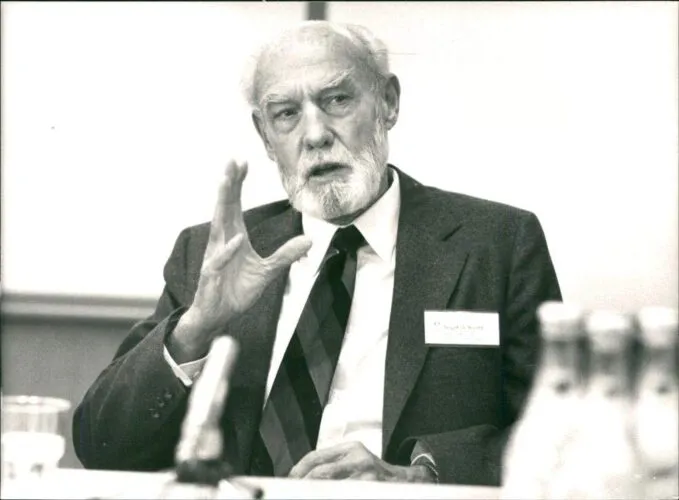 Photo: Roger Sperry, via observervoice.com
Sperry studied patients who had undergone a procedure called a corpus callosotomy — a surgery that severed the corpus callosum, the thick bundle of nerve fibers connecting the brain's two hemispheres. The surgery was used in severe epilepsy cases to prevent seizures from spreading between the two sides of the brain. Sperry's experiments on these "split-brain" patients revealed something fascinating: when the two hemispheres couldn't communicate, they sometimes behaved as if they had different capabilities and even different responses to stimuli.
The research showed, for example, that language processing tends to be more concentrated in the left hemisphere for most right-handed people, while certain spatial tasks showed more right-hemisphere activity. These were real findings. They told neuroscientists something meaningful about how the brain organizes certain functions.
What they did not show was that human beings could be sorted into two cognitive personality types based on which hemisphere was "dominant."
Where the Myth Grew Legs
The jump from Sperry's split-brain research to the pop psychology personality framework happened fast. By the 1970s and '80s, the findings had been picked up by educators, self-help writers, and business consultants who were hungry for a clean, memorable model of human cognition. The nuance got stripped away almost immediately.
Books appeared claiming to teach readers how to "use their right brain" for creativity. Corporate training programs divided employees into left-brained and right-brained thinkers. Schools began designing curricula around the idea. The framework was simple, intuitive, and offered people a satisfying explanation for their own strengths and limitations. It sold.
The problem is that it was describing something the original research never established. Sperry's split-brain patients were a very specific population — people whose brains had been surgically altered in a dramatic way. Their behavior under highly controlled experimental conditions couldn't be generalized to explain how ordinary, intact human brains work day to day.
What Brain Imaging Actually Shows
When modern neuroimaging technology made it possible to watch the living brain in action, researchers expected to find evidence of strong hemispheric dominance in typical people. Instead, they found something more complicated and considerably less convenient for the self-help industry.
A large-scale study published in 2013 by researchers at the University of Utah analyzed brain scans from more than 1,000 people and found no evidence that individuals consistently used one hemisphere more than the other. Activity was distributed across both hemispheres depending on the task, and there was no pattern suggesting that some people were systematically "left-brained" or "right-brained" in their cognitive style.
 Photo: University of Utah, via thumbs.dreamstime.com
This wasn't a surprising result to neuroscientists — it confirmed what the field had been moving toward for years. The brain is an integrated organ. The two hemispheres do have some functional differences, particularly in language and certain spatial tasks, but those differences are subtle, context-dependent, and nowhere near the clean personality divide the popular version describes. Creativity, for instance — supposedly the domain of the right brain — actually involves widespread activity across both hemispheres, including regions of the left brain.
Why the Myth Won't Quit
Neuroscientists have been pushing back on the left brain / right brain personality model for decades. So why is it still everywhere?
Part of the answer is that it's genuinely useful as a metaphor — just not as a literal description of brain function. Saying someone is "more analytical" or "more creative" in their thinking style describes something real about how people approach problems. The mistake is anchoring that metaphor to a specific and misleading claim about brain anatomy.
The other part of the answer is commercial. The left brain / right brain framework has generated an enormous amount of money in books, workshops, educational products, and personality assessments. The Myers-Briggs Type Indicator, the Enneagram, and a dozen other personality systems have all borrowed from or reinforced the same basic idea: that human cognitive style can be sorted into clean categories. These products are popular precisely because people find them validating. Telling someone their test result proves they're a creative right-brainer feels good. It doesn't need to be neurologically accurate to do that job.
Roger Sperry himself, in his Nobel lecture, was careful about what his research could and couldn't claim. The oversimplification that followed wasn't something the science produced — it was something the market demanded.
The Takeaway
The brain does have two hemispheres, and those hemispheres do have some functional differences. That part is real. What isn't real is the idea that you're either an analytical left-brain person or a creative right-brain person — that distinction has no basis in how the brain actually operates. The next time a quiz tries to sort you into one category or the other, the most accurate answer is probably: both, simultaneously, all the time.