Your Midnight Wakeups Aren't Insomnia — They're How Humans Slept for Thousands of Years
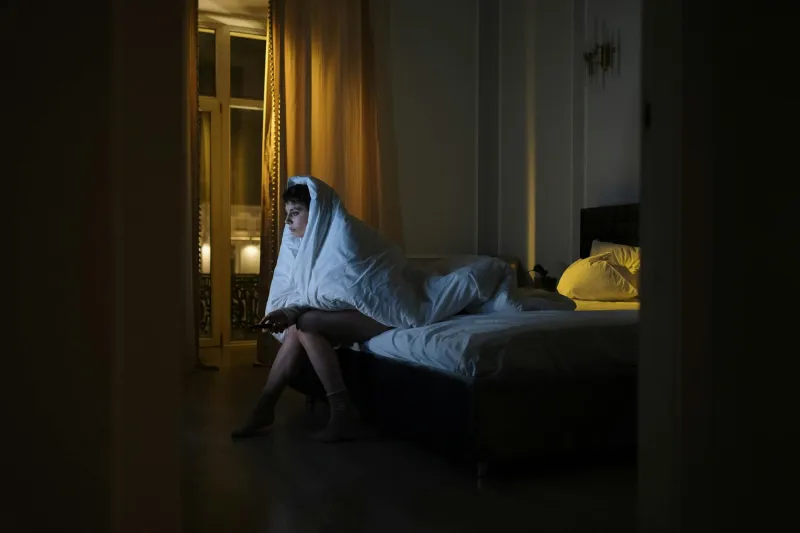
The 3 AM Panic That Wasn't Always a Problem
If you've ever jolted awake at 3 AM and spent the next hour staring at the ceiling, you're probably familiar with that sinking feeling: I'm not getting my eight hours. Tomorrow is going to be terrible. Americans collectively spend over $15 billion annually on sleep aids, mattresses, and apps designed to deliver the holy grail of modern rest — eight consecutive hours of unconsciousness.
But what if that middle-of-the-night awakening isn't a sleep disorder at all? What if it's actually your brain doing exactly what human brains did for millennia before electric lights rewired our relationship with darkness?
When Two Sleeps Were Better Than One
Historical records from medieval Europe through the early 1800s reveal something remarkable: people didn't sleep through the night. They practiced what researchers now call "segmented sleep" — going to bed shortly after sunset, sleeping for three to four hours, then waking up for one to three hours in the middle of the night before returning to sleep until dawn.
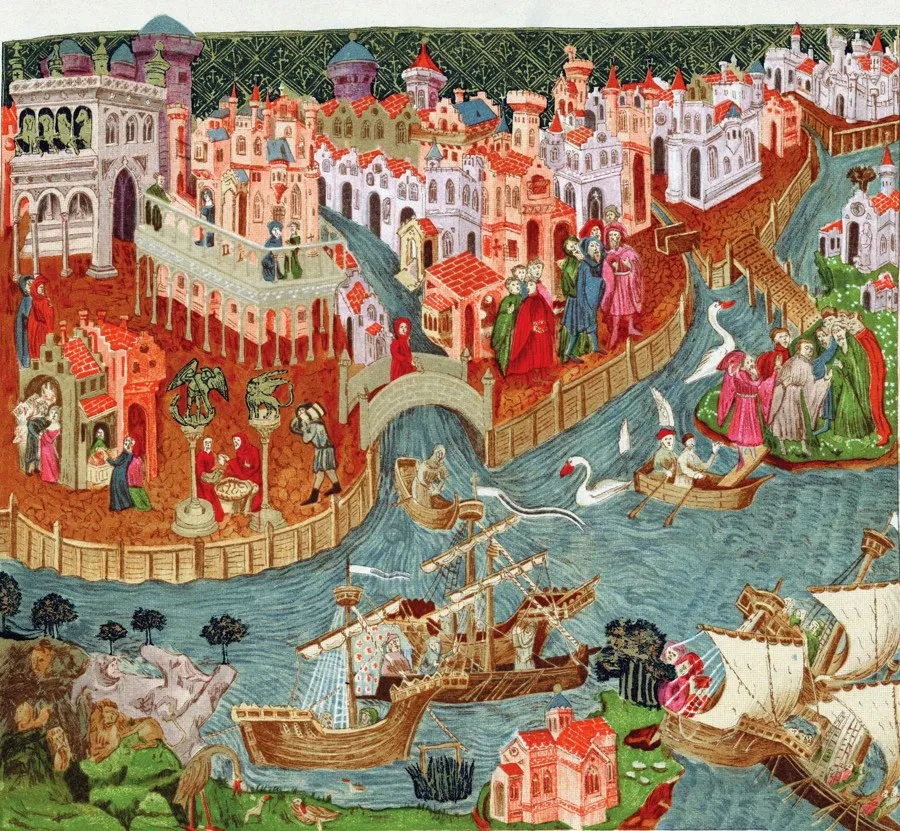 Photo: medieval Europe, via kottke.org
During this middle-of-the-night wakeful period, people weren't tossing and turning with anxiety. They were productive. They prayed, talked with their spouses, checked on livestock, visited neighbors, or engaged in what historical documents delicately referred to as "intimate relations." Some even had a specific meal during this time, called "dorveille" in French.
This wasn't the behavior of insomniacs — it was so normal that languages had specific words for the two sleep periods. The first sleep was "first sleep" or "dead sleep," and the second was "morning sleep" or "second sleep."
How Factories Killed the First Sleep
The shift toward eight continuous hours didn't happen because scientists discovered it was healthier. It happened because the Industrial Revolution demanded standardized work schedules.
Before artificial lighting became widespread in the late 1800s, human activity naturally followed the sun. People went to bed when it got dark and woke up when it got light, with that natural break in between. But as gas lights and then electric bulbs extended the day, and as factory work required precise shift schedules, the idea of sleeping in one solid block became economically convenient.
By the early 1900s, efficiency experts and industrial psychologists were promoting eight hours of work, eight hours of leisure, and eight hours of sleep as the optimal way to organize human life. The "8-8-8" rule wasn't based on sleep research — it was based on maximizing industrial productivity.
What Modern Sleep Science Actually Says
Here's where it gets interesting: when contemporary sleep researchers have studied people in environments without artificial light, many naturally return to segmented sleep patterns.
In the 1990s, psychiatrist Thomas Wehr conducted experiments where participants lived for weeks with 14 hours of darkness each night, mimicking pre-industrial light exposure. After a few weeks of adjustment, most subjects settled into a pattern remarkably similar to historical accounts — four hours of sleep, two hours of quiet wakefulness, then four more hours of sleep.
 Photo: Thomas Wehr, via www.doverferryphotosforums.co.uk
During the wakeful period, participants reported feeling peaceful and meditative, not anxious or frustrated. Their brains showed patterns associated with relaxation and creativity, not the stress responses we associate with modern insomnia.
Why We're Still Fighting Our Biology
The persistence of middle-of-the-night waking in modern society makes more sense when you consider that our circadian rhythms evolved over hundreds of thousands of years, while electric lighting has only been widespread for about 150 years.
Your 3 AM awakening might not be broken sleep — it might be your brain's ancient programming asserting itself despite your modern schedule. The anxiety that often accompanies these awakenings may come not from the waking itself, but from the cultural message that waking up means something is wrong.
The Real Sleep Revolution
This doesn't mean you should abandon your current sleep schedule and embrace 2 AM meditation sessions — most of us have work and family obligations that require being functional during standard daytime hours. But understanding the historical context can reduce the anxiety that often makes middle-of-the-night waking genuinely problematic.
Some sleep researchers now suggest that if you do wake up in the middle of the night, fighting it with sleep apps and anxiety might be counterproductive. Instead, they recommend accepting the wakefulness, doing quiet activities like reading or light stretching, and returning to sleep when you feel naturally drowsy again.
The eight-hour sleep block isn't a biological imperative — it's an industrial-era invention that happened to stick. Your midnight wakeups might not be a sign that your sleep is broken. They might be a sign that your sleep is trying to remember how it worked for most of human history.
The Bottom Line
Next time you find yourself awake at 3 AM, remember that countless generations of your ancestors were doing the exact same thing — not because they had insomnia, but because that's simply how human sleep naturally worked. The problem isn't your biology; it's the expectation that your biology should conform to a factory schedule.
Maybe the real sleep disorder is thinking there's only one right way to sleep.