The Gunfight at the OK Corral Lasted 30 Seconds. The Myth Has Been Running Ever Since.
The Gunfight at the OK Corral Lasted 30 Seconds. The Myth Has Been Running Ever Since.
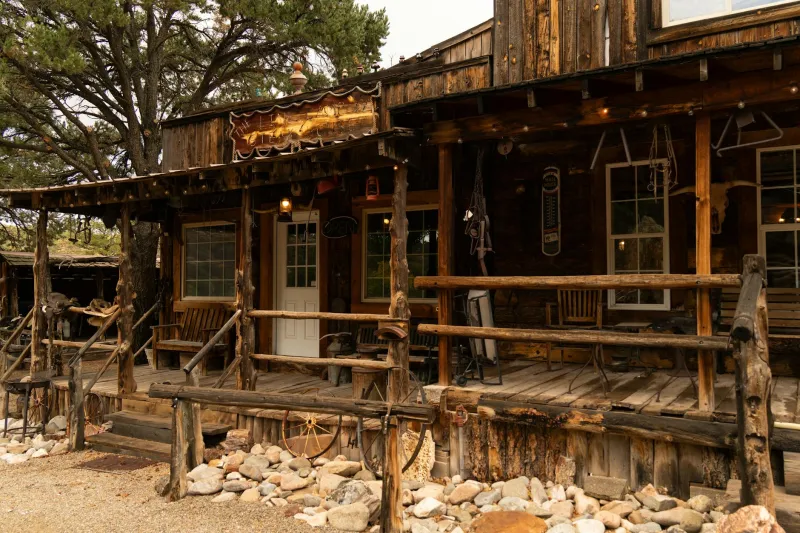
Close your eyes and picture the Wild West. You probably see a sun-baked main street, a saloon with swinging doors, a lone cowboy in a wide-brimmed hat facing down a villain at high noon. Maybe there's a sheriff with a tin star, a stagecoach kicking up dust, and somewhere in the background, a wanted poster flapping in the wind.
That image is one of the most powerful pieces of shared American mythology ever constructed. It's also largely a work of fiction — assembled piece by piece over more than a century by dime novelists, a circus impresario named Buffalo Bill, and eventually Hollywood, which turned the whole thing into an industry.
The actual frontier? It was something else entirely.
What the History Books Say
Historians who study the American West have been quietly correcting the record for decades, and their findings tend to surprise people.
Frontier towns were not the lawless powder kegs that movies depict. Many of them had stricter gun regulations than modern American cities. Dodge City, Kansas — one of the most mythologized towns in Western lore — actually required visitors to check their firearms at the edge of town upon arrival. Tombstone, Arizona had similar ordinances. The famous Gunfight at the OK Corral, the symbolic centerpiece of Wild West mythology, lasted somewhere between 30 seconds and a minute. Three men died. It was considered a shocking and unusual event at the time, not a routine afternoon.
The daily reality of frontier life was overwhelmingly ordinary: farming, cattle drives, commerce, debt, bad weather, and the grinding work of building towns from nothing in remote places. Saloons existed, yes — but they were community gathering spaces as much as anything else, places where men played cards and talked business as much as they shot each other.
The People the Myth Erased
One of the more significant distortions in the standard Wild West narrative is who gets left out of it entirely.
The real frontier was genuinely multicultural in ways that the Hollywood version almost never acknowledged. Chinese immigrants built significant portions of the transcontinental railroad and established communities throughout California and Nevada. Mexican vaqueros — the actual inventors of cowboy culture, right down to the lasso, the chaps, and the techniques of cattle herding — were largely written out of the story and replaced with Anglo heroes. Black cowboys made up an estimated 25 percent of the cattle drive workforce after the Civil War, including figures like Nat Love and Bass Reeves, the latter of whom some historians believe was a partial inspiration for the Lone Ranger. You'd never know any of this from watching westerns.
Native American history in this era is, of course, its own vast and painful subject — one that the western genre handled almost uniformly as backdrop or obstacle rather than reality.
How the Myth Got Built
The construction of the Wild West myth is actually a fascinating case study in how entertainment shapes historical memory.
It started with dime novels in the 1860s and 1870s — cheap, mass-produced fiction that turned real figures like Wild Bill Hickok and Jesse James into larger-than-life archetypes. These books were consumed by millions of readers in the East and in Europe, people who had no direct experience of the frontier and no reason to question what they were reading.
Then came William Cody — Buffalo Bill — who turned the mythology into live theater. His "Wild West" show, which toured the United States and Europe from 1883 into the early 20th century, was a spectacular piece of entertainment that presented a carefully curated, romanticized version of frontier life to enormous audiences. Sitting Bull appeared in it. Annie Oakley was a star. Queen Victoria watched a performance. The show was enormously influential in cementing the visual language of the West — the costumes, the staging, the narrative of rugged individualism and conquest — into the public imagination.
Hollywood took that template and ran with it for the next hundred years. John Ford's westerns defined the landscape. John Wayne defined the hero. By the time TV brought shows like Gunsmoke and Bonanza into American living rooms every week, the myth had completely displaced the history in most people's minds.
Why It Resonates So Deeply
The Wild West myth isn't just popular because of good marketing. It taps into something that Americans genuinely want to believe about themselves: that there was a time of radical individual freedom, of clear moral stakes, of a vast open landscape where a person could define themselves through courage and action.
That's a compelling story. It's just not a very accurate history.
The frontier was a place of real violence and real hardship, but also of cooperation, community-building, and cultural complexity. The people who actually lived it were navigating economic pressures, ethnic tensions, legal structures, and the aftermath of the Civil War — not riding into sunsets.
The Takeaway
The Wild West as most Americans picture it is one of the most successful mythologies ever sold to a culture. It was built deliberately, refined over generations, and delivered through every entertainment medium available. The real West — complicated, multicultural, and considerably less cinematic — never really had a chance.
That doesn't mean the myth isn't interesting. It just means that what it tells us about American storytelling is more revealing than what it tells us about American history.