Scientists Never Said Humans Came From Chimps — That's Just Bad Science Class
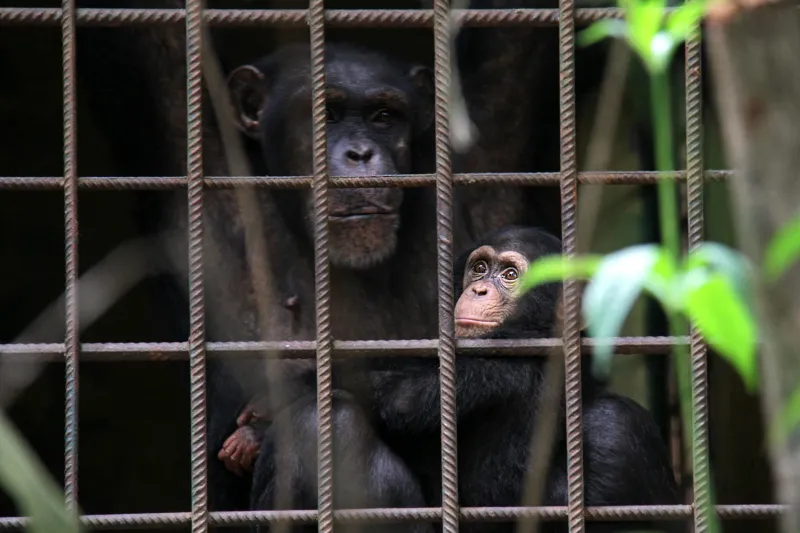
The Myth That Won't Die
Walk into any debate about evolution in America, and you'll hear it within minutes: "If humans came from monkeys, why are there still monkeys?" It's become the go-to argument for people skeptical of evolutionary science, and it sounds pretty logical on the surface.
There's just one problem: scientists have never claimed humans descended from chimpanzees, gorillas, or any other living primate. Not Darwin, not modern biologists, not anyone in the scientific community. Yet this misunderstanding has shaped decades of public debate about one of biology's most well-established theories.
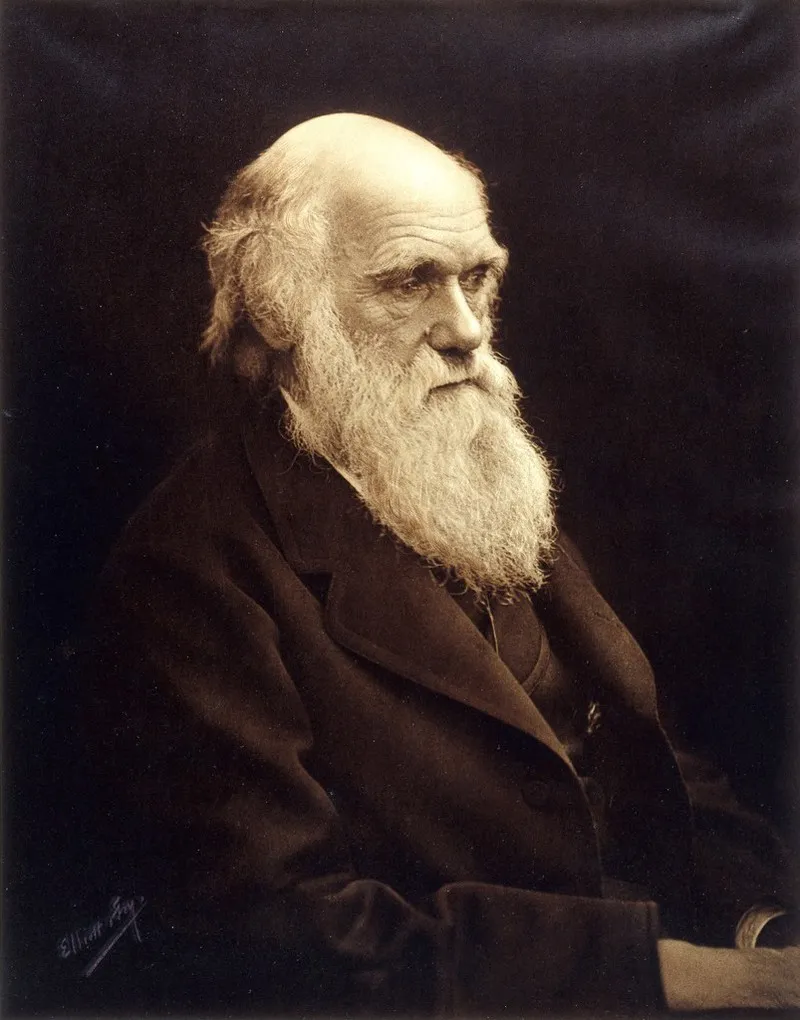 Photo: Darwin, via iiif.wellcomecollection.org
What Scientists Actually Say
The real claim is far more nuanced. Evolutionary biologists say humans and chimpanzees share a common ancestor — a species that lived roughly 6-7 million years ago and no longer exists. Picture a family tree: you and your cousin didn't descend from each other, but you both descended from the same grandparents.
That ancient ancestor wasn't a chimp, wasn't a human, and wasn't anything you'd recognize today. Over millions of years, different populations of this species evolved along separate paths. One lineage eventually led to modern chimpanzees and bonobos. Another led to various human ancestors and, ultimately, to us.
This is why chimpanzees are still around — they're not our ancestors, they're our evolutionary cousins. We're both modern species that happened to evolve from the same starting point.
How the Confusion Started
So where did the "humans from chimps" idea come from? Largely from oversimplified explanations that were never meant to be taken literally.
Early biology textbooks often showed evolution as a linear progression: fish to amphibian to reptile to mammal to primate to human. These "march of progress" illustrations made complex evolutionary relationships look like a simple chain of upgrades, with humans as the obvious endpoint.
Classroom shortcuts didn't help. Teachers explaining human evolution would often say things like "humans evolved from ape-like ancestors" or "we share ancestry with other primates." Students heard "we came from apes" — close enough to be confusing, different enough to be wrong.
The media amplified the confusion. Headlines about "missing links" and "ape ancestors" reinforced the idea that scientists were claiming direct descent from modern primates. Even well-meaning documentaries sometimes used language that suggested we evolved "from" chimps rather than "alongside" them.
Why the Myth Persists
This misunderstanding has remarkable staying power, and it's not hard to see why. The simplified version is easier to visualize and remember. "Humans came from chimps" is a concrete claim you can picture. "Humans and chimps diverged from a common ancestor millions of years ago" requires understanding branching evolutionary trees and deep time.
The myth also feels more dramatic and controversial, which makes it stick in people's minds. "We're related to all life on Earth through common ancestry" doesn't provoke the same reaction as "we used to be monkeys."
Politics plays a role too. Evolution remains contentious in American culture, and the chimp misconception provides an easy target for criticism. It's much simpler to attack the idea that "humans came from monkeys" than to engage with the actual scientific evidence for common descent.
The Real Evidence
Meanwhile, the evidence for shared ancestry keeps getting stronger. We share about 99% of our DNA with chimpanzees — not because we descended from them, but because we both inherited that DNA from our common ancestor. The 1% difference accumulated over millions of years of separate evolution.
Fossil discoveries have filled in much of the human family tree, showing species like Australopithecus and Homo erectus that lived after our lineage split from other apes but before modern humans appeared. These aren't "missing links" between chimps and humans — they're our actual ancestors, distinct from any living primate.
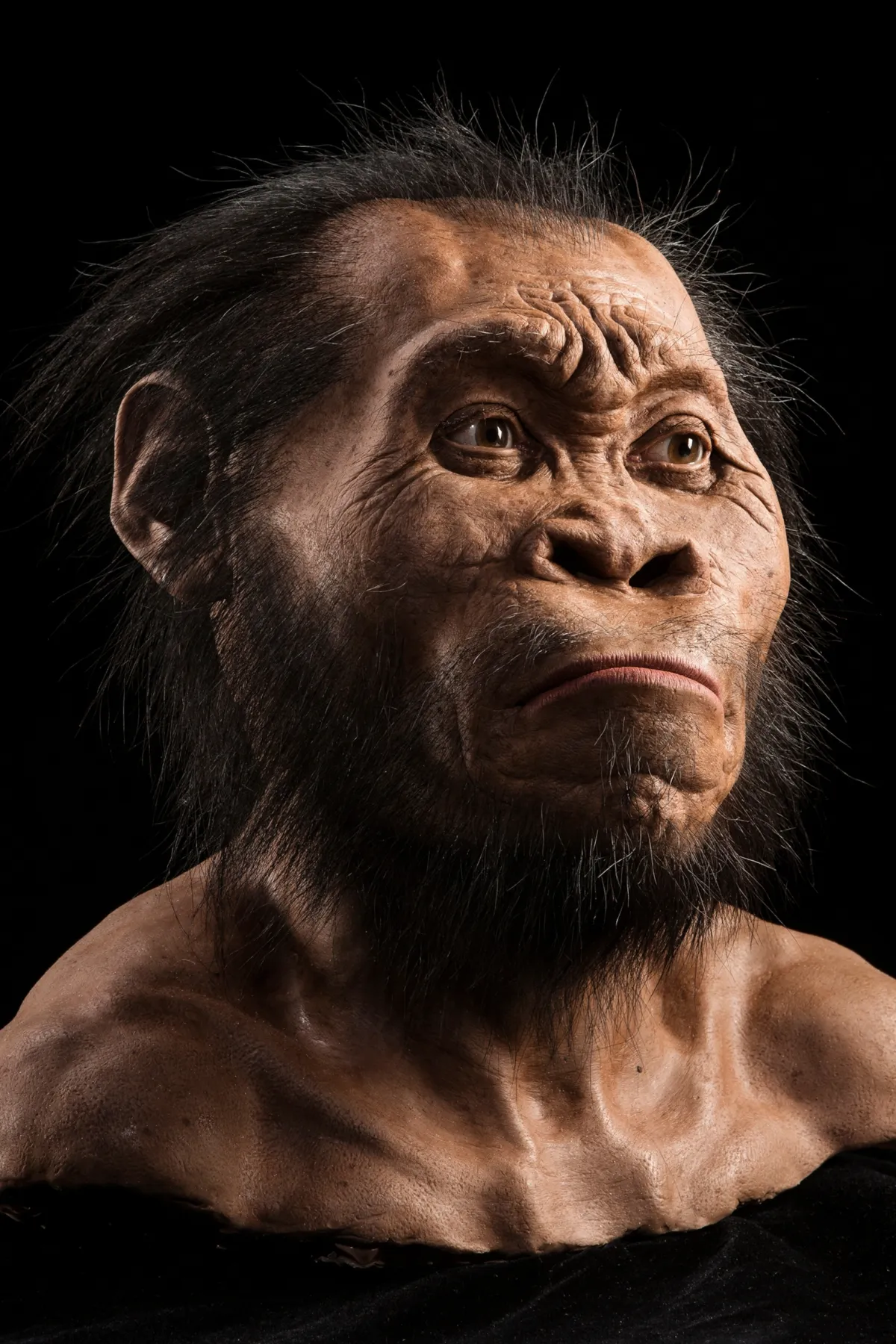 Photo: Homo erectus, via i.natgeofe.com
Comparative anatomy tells the same story. Humans, chimps, gorillas, and orangutans all share similar bone structures, muscle attachments, and organ systems because we inherited these features from common ancestors. The differences reflect millions of years of adaptation to different environments and lifestyles.
Setting the Record Straight
Understanding what evolution actually claims matters for more than just scientific literacy. The chimp misconception has fueled unnecessary cultural battles and prevented productive conversations about human origins.
The real story is actually more interesting than the simplified version. Instead of a linear progression from "lower" to "higher" life forms, evolution reveals a complex tree of relationships connecting all living things. Humans aren't the pinnacle of evolution — we're one branch among millions, shaped by the same natural processes that produced everything from bacteria to blue whales.
Next time someone asks why there are still monkeys if humans evolved from them, you'll know the answer: because we didn't. We're all just distant cousins, sharing a planet and a family tree that stretches back billions of years.
The Bottom Line
Scientists have spent 150 years building evidence for evolution, and "humans came from chimps" was never part of the theory. That idea came from classroom shortcuts, media oversimplifications, and the human tendency to prefer simple stories over complex ones. Understanding the difference won't settle every debate about human origins, but it might help people argue about what scientists actually say instead of what they never claimed in the first place.