Medieval Europe Built Cathedrals and Universities While We Called It the 'Dark Ages'
Medieval Europe Built Cathedrals and Universities While We Called It the 'Dark Ages'
Most Americans picture medieval Europe the same way: grimy peasants cowering in hovels, superstitious monks burning books, and society grinding to a halt for a thousand years. We call it the "Dark Ages" like it's historical fact, not realizing we're repeating a Renaissance-era marketing slogan that stuck around for 500 years.
The reality? While medieval Europeans were building Gothic cathedrals that still take your breath away, founding the world's first universities, and developing technologies that would reshape agriculture, Renaissance writers were busy trashing their reputation to make themselves look good.
The 'Dark Ages' Was Renaissance Spin
The whole concept started with Francesco Petrarca (better known as Petrarch) in the 1300s. This Italian poet wanted to revive classical Roman literature, so he dismissed everything between the fall of Rome and his own time as a "dark age" — a period of ignorance separating him from the glorious ancient past he admired.
Later Renaissance writers ran with this idea. They painted medieval times as backward and superstitious, positioning themselves as the enlightened ones bringing back classical learning. It was essentially a 14th-century version of "Make Rome Great Again," and it worked so well that we're still buying it.
The term "Dark Ages" wasn't even widely used until the 1600s, when historians started applying it to the early medieval period. By then, it had evolved from Petrarch's personal opinion into accepted historical fact.
What Was Actually Happening in Medieval Europe
While Renaissance writers were busy badmouthing their predecessors, medieval Europeans had been quietly revolutionizing society. The period from roughly 500 to 1500 CE saw innovations that would define Western civilization.
Educational Revolution: Medieval Europe created the university system that we still use today. The University of Bologna (1088), Oxford (1096), and the Sorbonne (1150) weren't just schools — they were intellectual powerhouses that preserved and expanded knowledge. Monks didn't burn books; they copied them by hand, saving classical texts that would have otherwise disappeared.
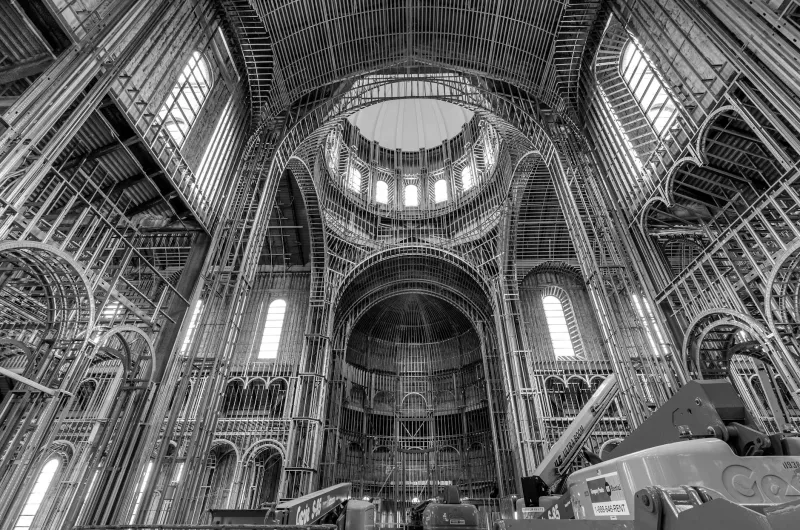
Architectural Marvels: Gothic cathedrals like Notre-Dame and Chartres required engineering knowledge that wouldn't look out of place in a modern construction textbook. These weren't primitive structures — they were cutting-edge technology wrapped in stone and stained glass.
Agricultural Innovation: The heavy plow, crop rotation systems, and the horse collar transformed farming. These innovations supported population growth that made everything else possible, from cities to universities to those famous cathedrals.
Legal and Political Development: Medieval Europe developed concepts like trial by jury, representative government, and legal codes that became the foundation for modern democratic systems. England's Magna Carta (1215) established principles that would later influence the U.S. Constitution.
The Islamic World Connection
One reason the "Dark Ages" myth persists is that it ignores what was happening outside Christian Europe. While European scholars were preserving classical knowledge, Islamic scholars in places like Baghdad, Cordoba, and Cairo were actively expanding it.
Medieval European intellectuals didn't reject this knowledge — they eagerly translated Arabic texts on mathematics, medicine, and philosophy. The University of Toledo became a famous translation center where Christian, Muslim, and Jewish scholars worked together. This wasn't a period of isolation; it was an era of cross-cultural exchange.
Why the Myth Stuck Around
The "Dark Ages" narrative survived because it served different purposes for different eras. Enlightenment thinkers in the 1700s used it to attack religious authority. Protestant reformers used it to criticize the Catholic Church. Even modern secular education sometimes presents it as the triumph of reason over superstition.
The myth also fits our modern bias toward progress. We like stories where humanity steadily improves, with clear good guys and bad guys. A nuanced view of medieval Europe — where progress happened alongside genuine problems like plague, warfare, and social inequality — doesn't make for neat historical categories.
The Real Story
Modern historians have largely abandoned the "Dark Ages" concept, at least in academic circles. They prefer terms like "Early Medieval" or "Late Antiquity" that don't carry the same baggage. The consensus among medieval scholars is clear: this was a period of significant cultural, technological, and intellectual development.
That doesn't mean medieval life was easy. Most people lived as subsistence farmers, medical knowledge was limited, and political instability was common. But the same could be said for most of human history, including periods we don't label as "dark."
The Takeaway
The next time someone mentions the "Dark Ages," remember that you're hearing Renaissance propaganda, not historical analysis. Medieval Europe wasn't a thousand-year timeout between Rome and the Renaissance — it was the period that created universities, Gothic architecture, and many of the legal and political concepts we take for granted.
The real dark age might be our continued willingness to accept a 500-year-old marketing campaign as historical fact.