That Old Saying About Lightning Is Literally Getting People Struck
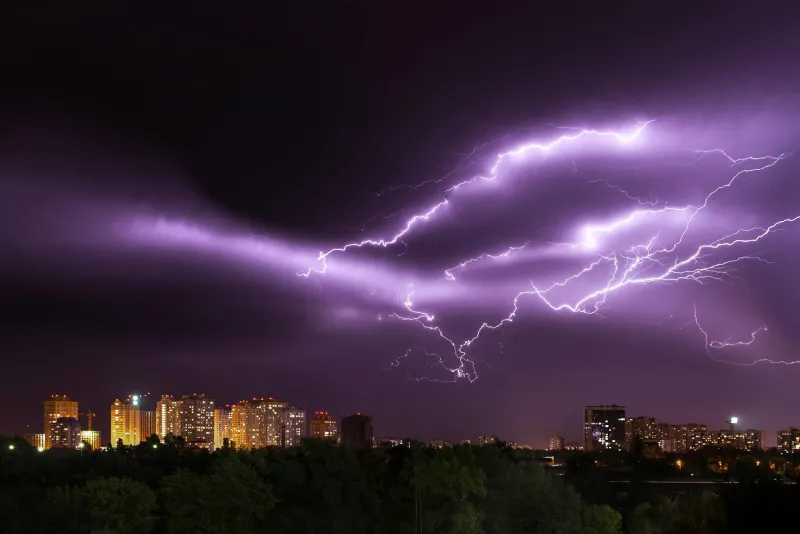
That Old Saying About Lightning Is Literally Getting People Struck
We've all heard it: "Lightning never strikes the same place twice." It rolls off the tongue with the authority of ancient wisdom, the kind of saying your grandmother might have shared while watching a thunderstorm roll across the plains. There's just one problem — it's completely, dangerously wrong.
The Empire State Building gets struck by lightning roughly 25 times every year. The Willis Tower in Chicago? About the same. In fact, tall structures are lightning magnets, getting hit repeatedly, predictably, year after year. Yet this myth persists, and it's not just harmlessly incorrect — it's creating real safety risks.
When Poetry Becomes "Science"
The phrase likely started as a metaphor about rare, unlikely events. Think of it like saying "history doesn't repeat itself" — it's meant to be poetic, not literal. But somewhere along the way, people began treating it as a scientific fact about electricity and weather.
The transformation probably happened gradually. Folk wisdom often contains kernels of practical knowledge mixed with colorful language. When your great-grandfather said lightning doesn't strike twice, he might have been trying to comfort someone after a traumatic event, not deliver a meteorology lesson. But as the saying spread, the metaphorical meaning got lost.
By the mid-20th century, this bit of folk poetry had somehow become accepted as natural law. Even today, you'll hear people confidently state that lightning avoids places it's already hit, as if electricity has a memory and a sense of fairness.
The Physics Don't Care About Fairness
Lightning is essentially nature's way of balancing electrical charge between clouds and the ground. It follows the path of least resistance, which means it's drawn to the tallest, most conductive objects in an area. Once lightning finds a good path — say, through a tall building or a lone tree — that same path remains the best option for future strikes.
This is exactly why lightning rods work. Benjamin Franklin didn't invent them based on the hope that lightning would politely avoid buildings it had already visited. He understood that electricity seeks the easiest route, so he gave it one.
Modern lightning protection systems rely entirely on this principle. They create intentional strike points that channel electricity safely to the ground. If the "never strikes twice" myth were true, these systems would be useless after their first success.
The Dangerous Real-World Impact
This myth creates a false sense of security that can be literally deadly. People sometimes assume that areas recently struck by lightning are somehow "safe" for a while. Storm chasers and outdoor enthusiasts have been known to take shelter near recently struck trees or structures, thinking they've found a lightning-free zone.
The reality is the opposite. That tree or building just proved it's an excellent conductor in a prime location. It's likely to get hit again.
Even more concerning, some people interpret the saying to mean that individuals can't be struck twice. Roy Sullivan, a park ranger in Virginia, was struck by lightning seven times between 1942 and 1977. He survived all seven strikes, but his experience definitively proves that human lightning rods do exist.
Why We Keep Believing
Several factors help this myth survive despite overwhelming evidence against it:
Confirmation bias plays a role. Most people don't carefully track lightning strikes in their area, so they don't notice when the same locations get hit repeatedly.
The saying sounds authoritative. It has that ring of traditional wisdom that makes people want to believe it, especially when delivered with confidence.
Lightning strikes are relatively rare events. Even in lightning-prone areas, the average person doesn't witness enough strikes to notice patterns.
Media coverage tends to focus on unusual strikes — the golfer hit on a clear day, the freak accident — rather than routine strikes hitting the same radio towers and skyscrapers year after year.
What You Should Actually Know
Real lightning safety is much simpler than folklore suggests:
- Seek shelter in substantial buildings or hard-topped vehicles
- Avoid tall, isolated objects like trees or flagpoles
- Stay away from metal objects and bodies of water
- If caught in the open, crouch low but don't lie flat
- Wait 30 minutes after the last thunder before resuming outdoor activities
The "30-30 rule" is worth remembering: seek shelter when you can count 30 seconds or less between lightning and thunder, and wait 30 minutes after the storm passes.
The Takeaway
The next time someone confidently declares that lightning never strikes the same place twice, you can tell them about the Empire State Building's annual light show. Better yet, you can explain why this dangerous myth needs to die.
Real storm safety isn't about memorizing catchy sayings — it's about understanding how electricity actually behaves. Lightning doesn't care about fairness, patterns, or poetic justice. It just wants the easiest path to the ground, and it will take that same path as many times as physics allows.
Sometimes the old wisdom isn't wise at all. Sometimes it's just old.