A Grandmother's Warning Started a Medical Myth — Then One Scientist Cracked the Case
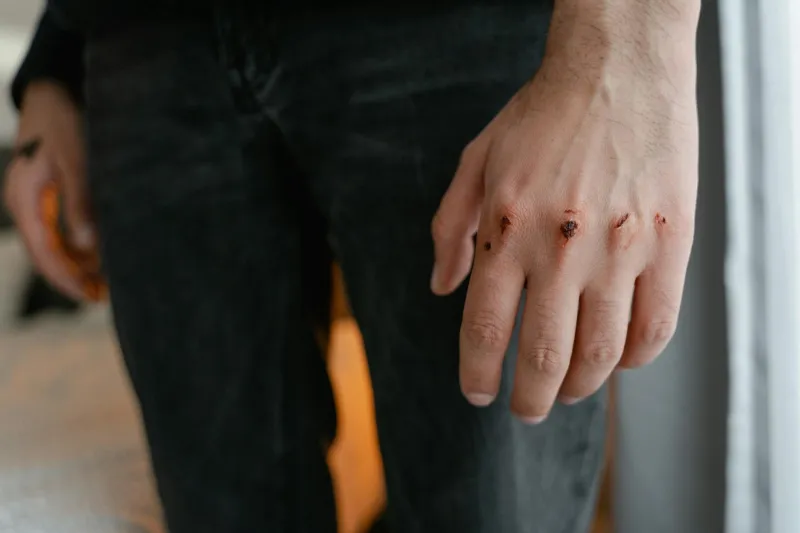
The Warning That Started It All
If you've ever cracked your knuckles in front of an older relative, you've probably heard it: "Stop that! You'll get arthritis!" It's one of those warnings that gets passed down through generations, right alongside "Don't sit too close to the TV" and "Wait 30 minutes after eating before swimming."
But unlike those other parental advisories, the knuckle-cracking warning has somehow achieved the status of accepted medical fact. Ask most Americans, and they'll confidently tell you that the satisfying pop of cracking joints leads directly to swollen, painful arthritis later in life.
There's just one problem: it's completely wrong.
One Doctor's 60-Year Experiment
Dr. Donald Unger was a young medical student when his mother and aunts repeatedly warned him about his knuckle-cracking habit. As someone studying medicine, he found their certainty suspicious. Where was the evidence? What studies had proven this connection?
So Unger decided to conduct his own experiment — one that would last six decades.
Starting in his twenties, Unger cracked the knuckles on his left hand at least twice daily. His right hand? He left it completely alone. For 60 years, he maintained this routine religiously, creating what might be the longest-running self-experiment in medical history.
The results were clear: no difference in arthritis between his hands. Zero. His left hand — the one he'd been cracking for six decades — showed no more signs of joint damage than his right.
In 2009, Unger's dedication earned him an Ig Nobel Prize, the award given to research that "first makes people laugh, then makes them think." His study had a sample size of exactly one, but it perfectly illustrated what larger studies had already shown.
What Actually Happens When You Crack Your Knuckles
The satisfying pop isn't your bones grinding together or cartilage wearing away. It's actually gas bubbles in your synovial fluid — the lubricant that keeps your joints moving smoothly — collapsing under pressure.
When you bend your finger in that particular way, you temporarily expand the joint space. This creates a vacuum that causes dissolved gases (mainly nitrogen) to form bubbles, which then rapidly collapse with that distinctive popping sound. It's basically the same physics that creates the sound when you pop bubble wrap.
Once those bubbles collapse, it takes about 15-20 minutes for enough gas to redissolve in the fluid for another satisfying crack. That's why you can't immediately re-crack the same knuckle — you have to wait for the chemistry to reset.
The Real Research on Joint Health
Multiple large-scale studies have investigated the knuckle-cracking connection, and none have found evidence linking the habit to arthritis. A 1990 study published in the Annals of the Rheumatic Diseases looked at 300 people over age 45 and found no correlation between knuckle cracking and arthritis development.
If anything, some research suggests the opposite might be true. Regular joint movement — including the kind that happens when you crack your knuckles — can help maintain joint flexibility and health. The key word here is "regular," not "excessive."
Why the Myth Persists
So why does this misconception refuse to die? Several factors keep it alive:
The ick factor plays a huge role. That popping sound genuinely bothers many people, creating a visceral reaction that feels like something must be going wrong inside the joint. When something sounds unpleasant, we assume it must be harmful.
Correlation confusion also contributes. Some people who crack their knuckles do develop arthritis — but then again, so do plenty of people who never crack their joints. Arthritis is incredibly common, affecting over 50 million Americans. When two common things happen to the same person, it's easy to assume one caused the other.
The authority of repetition matters too. When everyone from your grandmother to your gym teacher repeats the same warning, it starts to feel like established medical fact rather than folk wisdom.
The Takeaway
Dr. Unger's experiment might seem silly, but it perfectly captures the scientific method in action: question assumptions, test hypotheses, and follow the evidence wherever it leads. His 60-year commitment to cracking just one hand demonstrated what larger studies had already suggested — that knuckle cracking is annoying to bystanders but harmless to your joints.
The next time someone warns you about arthritis from knuckle cracking, you can share the story of a doctor who literally spent his lifetime proving them wrong. Sometimes the most persistent health myths are just old fears dressed up as medical advice.
Your knuckles will be fine. Your relatives' patience, however, might be another story entirely.