Your Elementary School Lied: Humans Have Way More Than Five Senses
Every American kid learns the same basic fact in elementary school: humans have five senses. Sight, hearing, smell, taste, and touch. Teachers use it as a simple way to organize science lessons, artists reference it in their work, and most adults go through life confident they understand how their own bodies work.
There's just one problem: it's completely wrong. And we've known it's wrong for more than a century.
Modern neuroscience recognizes at least nine distinct human senses, with some researchers arguing for more than twenty. You're using several of them right now—sensing your body's position in space, monitoring your internal organs, detecting temperature changes—but you probably don't even realize it because nobody ever taught you their names.
How Ancient Greek Philosophy Became Modern Science Class
The five-sense framework comes from Aristotle, who proposed it around 350 BCE in his work "On the Soul." For a philosopher working 2,400 years ago, it was a reasonable attempt to categorize human perception. He looked at the obvious ways humans interact with the world and came up with five categories that seemed to cover the basics.
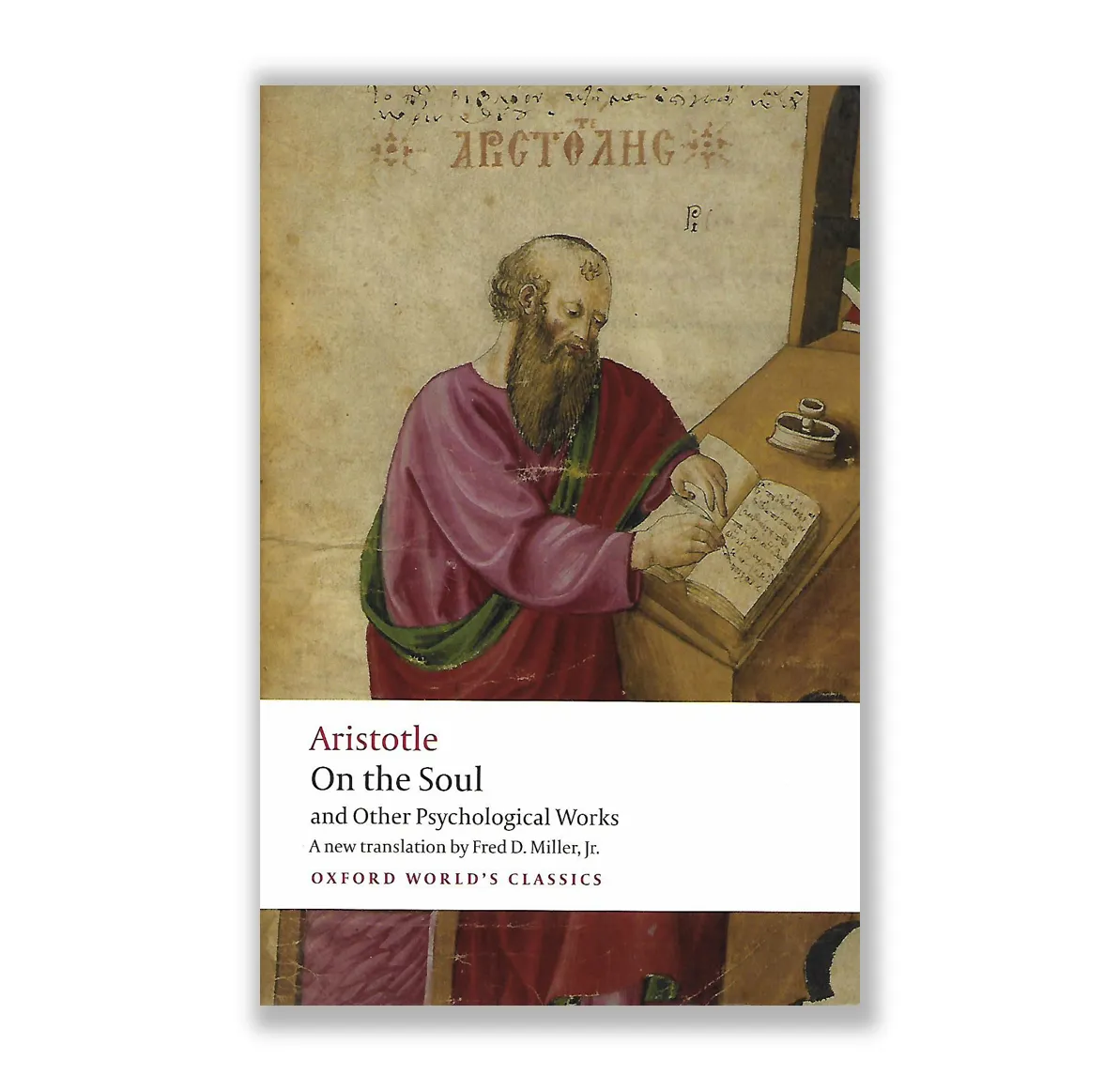 Photo: On the Soul, via www.riwayat.my
 Photo: Aristotle, via as1.ftcdn.net
The problem is that Aristotle wasn't doing neuroscience—he was doing philosophy. He had no way to study nerve pathways, brain regions, or the complex mechanisms that actually govern human perception. He was making educated guesses based on casual observation.
Yet somehow, his 2,400-year-old list became locked into educational curricula around the world. Even as scientists discovered additional senses throughout the 19th and 20th centuries, elementary school science books kept teaching Aristotle's framework as if it were established biological fact.
The Senses You Use Every Day (But Never Learned About)
Here are some of the human senses that didn't make Aristotle's list:
Proprioception is your sense of body position and spatial awareness. Right now, without looking, you know exactly where your hands are and how your legs are positioned. Close your eyes and touch your nose—that's proprioception at work. People who lose this sense (due to certain neurological conditions) can't walk or coordinate their movements without constantly watching their limbs.
Interoception is your awareness of internal bodily signals. It's how you know you're hungry, thirsty, need to use the bathroom, or feel your heart racing. This sense is crucial for basic survival, yet most people have never heard the word.
Thermoception is your ability to sense temperature. This isn't part of touch—it uses completely different nerve pathways and receptors. You can feel heat and cold even when nothing is physically touching your skin.
Equilibrioception is your sense of balance, controlled by the vestibular system in your inner ear. It's how you know which way is up and how you maintain balance while walking, running, or just standing still.
Nociception is your ability to sense pain. While we often think of pain as part of touch, it uses distinct neural pathways and serves a completely different biological function. Some people are born without the ability to feel pain, and their experience of "touch" is fundamentally different from everyone else's.
Why the Five-Sense Model Persists
If scientists have known about additional human senses for decades, why do schools still teach the five-sense framework?
Part of the answer is institutional inertia. Educational curricula change slowly, especially for basic concepts taught in elementary school. Teachers learn the five-sense model when they're students, then teach it to the next generation. Textbook companies keep printing the same simplified version because it's what teachers expect and parents remember from their own education.
There's also a practical problem: the additional senses are harder to explain to young children. Sight and hearing are obvious and easy to demonstrate. Proprioception and interoception are abstract concepts that require more sophisticated understanding of how the nervous system works.
But perhaps the biggest reason is that admitting humans have more than five senses forces us to confront how much we don't understand about our own bodies. The five-sense model is clean, simple, and makes people feel like they have a complete picture of human perception. Adding more senses makes the picture messier and more complex.
The Hidden Consequences of Getting It Wrong
Teaching the five-sense model might seem like harmless oversimplification, but it actually has real consequences for how people understand their bodies and health.
Consider interoception—your awareness of internal bodily signals. People with better interoceptive awareness tend to have better emotional regulation, make better decisions about their health, and are more in tune with their psychological needs. But if you've never been taught that this is a distinct sense that can be developed and improved, you're less likely to pay attention to it.
Or consider proprioception, which is crucial for athletic performance, injury prevention, and maintaining mobility as you age. Physical therapists spend enormous amounts of time helping patients rebuild proprioceptive awareness after injuries, but most people don't even know this sense exists until they lose it.
How Many Senses Do We Actually Have?
The honest answer is that scientists don't agree on an exact number. It depends on how you define a "sense" and how finely you want to subdivide different types of perception.
Some researchers argue for nine senses: the traditional five plus proprioception, interoception, thermoception, and equilibrioception. Others push for twelve or fifteen, breaking down categories like "touch" into separate senses for pressure, vibration, and texture.
A few scientists argue for more than twenty distinct senses, including separate systems for detecting different types of chemicals, monitoring various internal organs, and sensing different aspects of our environment.
The exact number matters less than understanding the broader point: human perception is far more complex and sophisticated than the five-sense framework suggests.
What Schools Should Teach Instead
So how should we teach children about human senses? Some progressive educators are already experimenting with expanded frameworks that include at least the most important additional senses.
Others suggest teaching the concept more dynamically—explaining that scientists are still discovering new things about how humans perceive the world, and that our understanding of the senses continues to evolve.
The key is helping students understand that the human body is more complex and capable than they might think, rather than reducing it to a simple list that hasn't been updated since ancient Greece.
The Real Lesson
The five-sense myth reveals something important about how scientific knowledge gets filtered through educational systems. Simple, memorable concepts often outlive the scientific understanding they were based on, sometimes by centuries.
Every time you automatically know where your hands are without looking, feel hungry or thirsty, maintain your balance while walking, or sense that a room is too hot or cold, you're using senses that didn't make it onto Aristotle's list. Your body is far more sophisticated than your elementary school science book ever suggested.
The next time someone mentions the "five senses," you can let them in on what neuroscientists have known for decades: humans are far more perceptive than we give ourselves credit for. We just never learned to notice all the ways we're constantly sensing the world around us—and inside us.