Hollywood's Dinosaurs Are Nothing Like the Real Thing — And Science Has Known for Decades
Hollywood's Dinosaurs Are Nothing Like the Real Thing — And Science Has Known for Decades
Close your eyes and picture a dinosaur. Chances are, you're seeing something that looks like it crawled out of Jurassic Park: scaly, reptilian skin in dull greens and browns, massive lizard-like creatures that roar like lions and move with the lumbering grace of oversized alligators.
 Photo: Jurassic Park, via static1.cbrimages.com
Now here's the problem: that mental image is completely wrong. And paleontologists have known it's wrong for decades.
The dinosaurs that actually walked the Earth were feathered, brilliantly colored, and behaved in ways that would make Steven Spielberg's creatures look like prehistoric cartoon characters. Yet somehow, the Hollywood version has proven nearly impossible to dislodge from the public imagination.
The Feather Revolution That Nobody Noticed
In 1996, Chinese paleontologists discovered something that should have changed everything: a small dinosaur called Sinosauropteryx with clear evidence of primitive feathers. Not just a few scattered plumes, but a full coat of fuzzy, hair-like proto-feathers covering its body.
This wasn't some bizarre evolutionary dead end. Over the next two decades, researchers found feathered dinosaur after feathered dinosaur. Velociraptors had elaborate wing feathers on their arms. Therizinosaurus, a massive plant-eater the size of an elephant, was covered in feathers like a giant, clawed chicken. Even T. Rex likely had feathers, at least as juveniles.
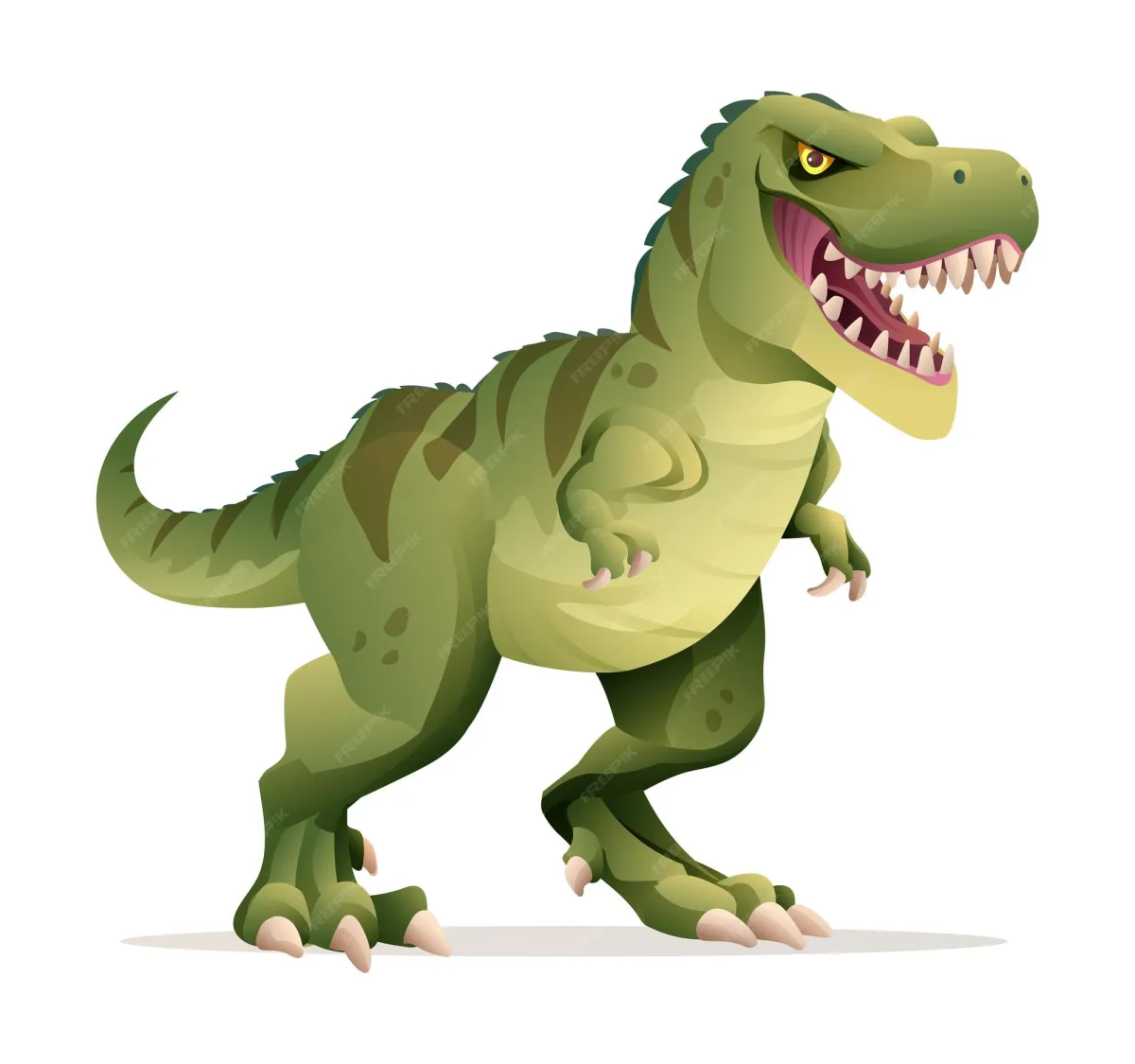 Photo: T. Rex, via img.freepik.com
By 2020, scientists had identified more than 50 species of feathered dinosaurs. The evidence became so overwhelming that paleontologists now assume feathers were the default for most dinosaur groups—scales were actually the exception, not the rule.
Yet walk into any toy store, flip through any children's book, or watch any dinosaur documentary made after 2000, and you'll still see the same scaly reptiles that dominated museum displays in 1920.
The Color Revolution You Never Heard About
But feathers were just the beginning. In 2008, researchers made an even more remarkable discovery: they could determine the actual colors of dinosaur feathers by studying microscopic structures called melanosomes preserved in fossils.
The results were stunning. Sinosauropteryx wasn't some drab brown creature—it had a reddish-orange coat with distinctive white and dark stripes on its tail, like a prehistoric raccoon. Anchiornis was jet black with white wing tips and a dramatic feathered crest. Borealopelta, a heavily armored herbivore, had reddish-brown coloring on top that faded to light tan on its belly—classic camouflage patterns.
Some dinosaurs were even more extravagant. Epidexipteryx had four long, ribbon-like tail feathers that served no flight purpose—they were purely for display, like a peacock's plumage. Carnotaurus, a fearsome predator, likely had bright red skin and prominent horns that it used for both intimidation and mating displays.
Why Hollywood's Version Won Out
If scientists have known about feathered, colorful dinosaurs for more than 25 years, why does popular culture still depict them as giant lizards?
The answer starts with timing. Jurassic Park came out in 1993, just three years before the first feathered dinosaur discovery. The movie's dinosaurs were based on the best available science of the time, which genuinely did suggest that dinosaurs were scaled, reptilian creatures. The problem is that the movie was so successful—and so visually striking—that it essentially froze our cultural image of dinosaurs at 1993 levels of knowledge.
There's also a practical problem: feathered dinosaurs are much harder to bring to life convincingly. CGI scales look reptilian and familiar. CGI feathers look fake and cartoonish, especially when they're supposed to be covering a 40-foot-long predator. Movie studios have billions of dollars invested in dinosaur franchises that depend on creatures looking scary and prehistoric, not like enormous, colorful birds.
Museums face similar challenges. Updating displays is expensive, and many visitors actually complain when dinosaur exhibits show feathered creatures—they don't match what people expect dinosaurs to look like.
The Bird Connection We Keep Missing
Perhaps the biggest obstacle to updating our dinosaur image is that accurate dinosaurs force us to confront an uncomfortable truth: dinosaurs never went extinct. They're still here, and we see them every day.
Birds aren't descended from dinosaurs—they are dinosaurs. Modern paleontologists don't even use the phrase "non-avian dinosaurs" when discussing extinct species, because the distinction is scientifically meaningless. A chicken is literally more closely related to T. Rex than T. Rex was to Stegosaurus.
Once you understand this relationship, feathered dinosaurs stop seeming weird and start seeming inevitable. Of course velociraptors had feathers—their direct descendants are hawks and eagles. Of course many dinosaurs were brightly colored—look at any tropical bird. Of course they engaged in elaborate mating displays—watch peacocks or birds of paradise.
What They Really Looked Like
Based on the best current evidence, here's what dinosaurs actually looked like:
Many were covered in feathers that ranged from simple, hair-like fuzz to complex, flight-capable plumage. Colors were often brilliant and varied—reds, oranges, blacks, whites, and patterns we can barely imagine. Some had elaborate crests, frills, and display features that they used for communication and mate selection.
They didn't roar like lions—they likely chirped, whistled, and made sounds more similar to modern birds. Many were highly social, living in flocks and caring for their young in ways that would seem familiar to anyone who's watched a family of geese.
The largest predators were probably ambush hunters that relied on speed and intelligence rather than brute force. Plant-eaters were often heavily armored, but they also used camouflage, group behavior, and warning displays to avoid predators.
The Slow March Toward Accuracy
Change is finally happening, but it's glacial. The most recent Jurassic World movies have added a few feathered species, though they're usually relegated to background roles. Some natural history museums have updated their displays to show feathered dinosaurs, though they often include disclaimers explaining that "this might look different from what you expect."
Children's books are slowly catching up—many new dinosaur books for kids now show at least some feathered species. But for every accurate depiction, there are still dozens of books, toys, and movies showing the old scaly versions.
The irony is that accurate dinosaurs are actually more interesting than Hollywood's version. Creatures with complex social behaviors, brilliant colors, and sophisticated communication are far more fascinating than simple-minded killing machines. But changing a cultural image that's been reinforced by decades of movies and merchandise isn't easy—even when science has moved far beyond what we thought we knew.
The next time you see a dinosaur in a movie or museum, remember: you're probably looking at a creature that would be as outdated and inaccurate as showing early humans as club-wielding cavemen. The real dinosaurs were far stranger, more beautiful, and more complex than anything Hollywood has ever imagined.