Local Food Feels Virtuous — But 'Food Miles' Tell Only a Fraction of the Story
Local Food Feels Virtuous — But 'Food Miles' Tell Only a Fraction of the Story
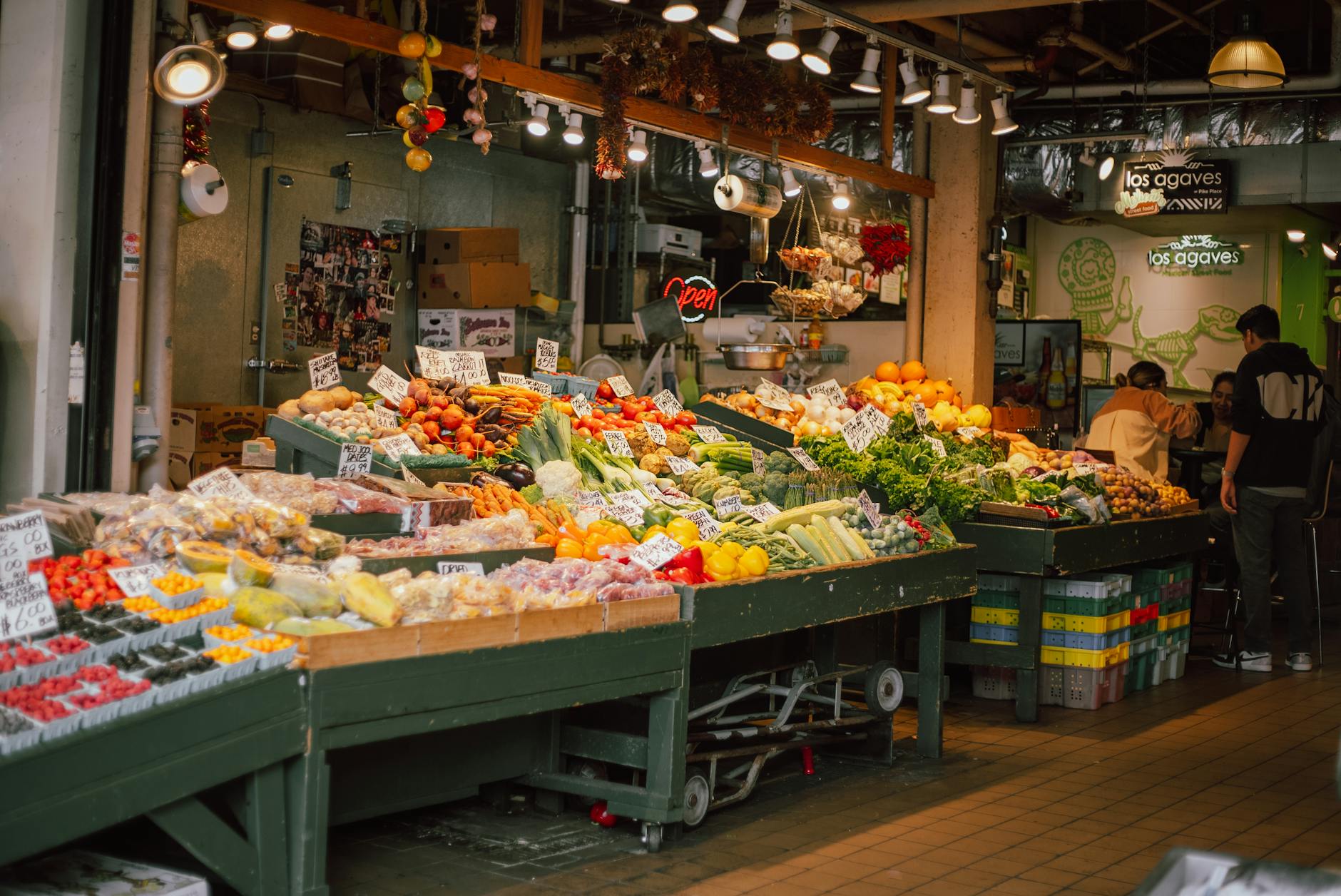
Walk through any farmers market on a Saturday morning in America — in Portland, in Nashville, in suburban New Jersey — and you'll feel it: that quiet sense of doing the right thing. The handwritten signs, the muddy root vegetables, the conversations with actual farmers. Buying local feels like a tangible act of environmental responsibility, a direct way to shrink your personal carbon footprint by cutting out the long, fuel-burning supply chain between a field and your plate.
The idea makes intuitive sense. Food that travels fewer miles must produce fewer emissions, right?
Not exactly. And in some cases, not even close.
The relationship between where your food comes from and how much environmental damage it causes is far more complicated than the "food miles" concept suggests — and researchers who study food systems have been trying to get this message out for years, with limited success against the cultural momentum of the local food movement.
Where the Food Miles Idea Came From
The term "food miles" was coined in the early 1990s by a British academic named Tim Lang, who used it to draw attention to the growing distances food was traveling through industrialized supply chains. The concept was meant as a starting point for thinking about food system sustainability — a way of making the invisible visible.
It worked, maybe too well. The idea translated cleanly into consumer behavior messaging: shorter distance equals lower impact. By the 2000s, food miles had become a cornerstone of sustainable eating discourse in the US and UK, embraced by environmental organizations, food writers, and grocery chains eager to market "local" as a green credential.
The problem is that transportation — the thing food miles measure — typically accounts for a relatively small share of a food product's total greenhouse gas emissions. And focusing on that one slice of the picture can lead consumers and policymakers to some genuinely misleading conclusions.
What the Research Actually Shows
A landmark 2008 study from researchers at Carnegie Mellon University broke down the lifecycle emissions of food consumed in the United States and found that transportation accounted for only about 11 percent of the average food product's total carbon footprint. The dominant factor — responsible for roughly 83 percent of emissions — was the production phase: how the food was grown, raised, or processed.
A 2020 analysis published in the journal Nature Food, which examined data from 38,000 farms and 1,600 processors across 119 countries, reinforced this conclusion. Food production, not distribution, drives the overwhelming majority of food-related greenhouse gas emissions globally.
What this means in practice is striking. Switching from beef to plant-based proteins, for example, has a dramatically larger emissions impact than switching from California strawberries to local ones. Red meat production — particularly beef and lamb — is extraordinarily emissions-intensive because of methane produced during digestion, land use requirements, and the resources needed to grow animal feed. A single kilogram of beef generates, on average, more than 60 kilograms of greenhouse gas emissions. A kilogram of legumes generates less than one.
In that context, the origin of your vegetables is almost a rounding error.
The Efficiency Problem With 'Local'
There's another layer to this that rarely makes it into farmers market conversations: local food production is not automatically more efficient than large-scale agriculture.
Efficiency matters enormously for emissions. Large industrial farms often produce food with lower per-unit emissions than smaller local operations because they benefit from economies of scale, optimized logistics, and in some cases, more precise resource management. Shipping a full truckload of tomatoes from a large farm in California to distribution centers across the Midwest can, per tomato, be less carbon-intensive than a small local farm delivering small quantities in a pickup truck to individual market stalls.
Seasonal eating compounds this further. Growing tomatoes in a heated greenhouse in Vermont in February to supply the local market produces far more emissions than shipping tomatoes from a field in Mexico where they're in season and require no artificial climate control. "Local" and "low impact" can point in completely opposite directions depending on the season and the crop.
A frequently cited example from UK research found that locally grown tomatoes produced in heated greenhouses had a significantly higher carbon footprint than Spanish tomatoes transported by truck — even accounting for the transportation emissions.
So Why Does the Myth Persist?
Because it feels true, and because it offers something rare in sustainability conversations: a simple, visible action.
Most of the factors that actually drive food emissions — methane from livestock digestion, nitrous oxide from fertilizers, land-use change from deforestation — are invisible to the average consumer standing in a grocery store. The distance a product traveled is at least something you can imagine. It maps onto familiar logic: closer is simpler, simpler is better.
The local food movement also carries genuine values worth respecting — supporting regional farmers, strengthening local economies, preserving agricultural land, building community connections to food. Those are real benefits. They're just largely separate from the carbon footprint question, and conflating them has created a misleading shorthand for environmental responsibility.
Food companies and marketers haven't helped. "Locally sourced" has become a premium label that signals environmental virtue without requiring any substantive emissions claims — because the regulatory bar for using it is essentially nonexistent.
A More Accurate Picture of Sustainable Eating
Researchers who study this consistently point to the same high-impact levers for reducing the environmental footprint of an American diet:
Eat less red meat and dairy. These categories alone account for a disproportionate share of food-related emissions. Even modest reductions have measurable impact.
Reduce food waste. Roughly 30 to 40 percent of the US food supply is wasted. The emissions embedded in food that ends up in landfills are substantial — and largely invisible in consumer-facing sustainability messaging.
Prioritize what's in season. Not because it's local, but because in-season produce requires less energy to grow and is less likely to have been produced in energy-intensive controlled environments.
Pay attention to production methods. Regenerative agriculture, reduced synthetic fertilizer use, and improved land management practices can significantly alter the emissions profile of a product regardless of where it was grown.
None of these are as aesthetically satisfying as carrying a canvas bag through a farmers market. But they reflect what the science actually says.
Buying local can be part of a thoughtful food philosophy. It just probably isn't doing what most people think it's doing for the climate — and understanding that distinction is the first step toward choices that actually move the needle.