Americans Believe They Only Use 10% of Their Brain — But This Hollywood Myth Has Zero Scientific Backing
Americans Believe They Only Use 10% of Their Brain — But This Hollywood Myth Has Zero Scientific Backing
If you've ever watched Limitless or Lucy, you've seen the tantalizing premise: what if you could unlock the 90% of your brain that's supposedly sitting idle? It's a compelling idea that's captured American imagination for decades. Walk into any bookstore's self-help section, and you'll find titles promising to help you "tap into your brain's full potential."
The problem? Neuroscientists have been trying to kill this myth for years, and it just won't die.
The Truth About Your Brain Usage
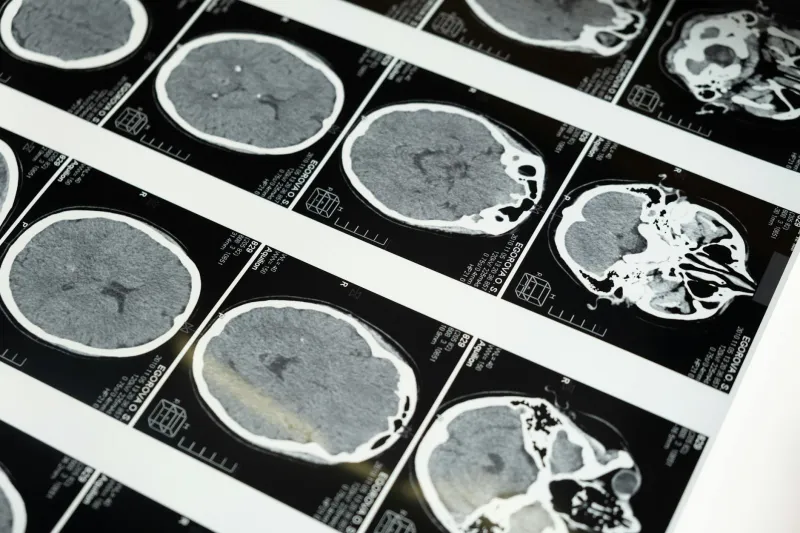
Here's what decades of brain imaging technology have shown us: you use virtually all of your brain, virtually all the time. Even during sleep, brain scans reveal widespread activity across different regions. When you're awake and alert, nearly every part of your brain shows some level of activation.
"We use essentially 100% of our brain," explains Dr. John Henley, a neurologist at the Mayo Clinic. Modern techniques like PET scans and fMRI imaging can detect brain activity down to tiny regions, and they consistently show that even simple tasks light up multiple areas simultaneously.
Think about it from an evolutionary perspective: your brain weighs about 3 pounds but consumes roughly 20% of your body's total energy. That's an enormous metabolic cost. If 90% of your brain tissue was deadweight, evolution would have eliminated it long ago. Our ancestors who carried around 2.7 pounds of useless brain matter would have been at a serious survival disadvantage.
Where This Persistent Myth Actually Came From
So how did Americans become convinced they were walking around with mostly unused brains? The myth appears to have multiple origin points, none of them particularly scientific.
The most commonly cited source is psychologist William James, who wrote in 1906 that "most of us do not meet our mental potential." But James never mentioned a specific percentage, and he was talking about people not challenging themselves intellectually — not about unused brain tissue.
Another potential source is early neurosurgery pioneer Wilder Penfield, who discovered in the 1940s that electrically stimulating certain parts of the brain during surgery didn't produce obvious responses. But Penfield understood that these "silent" areas were still functional — they just didn't control movement or sensation in ways that were immediately obvious.
The 10% figure itself seems to have emerged from a game of scientific telephone, where legitimate observations about human potential got distorted into a specific, made-up statistic.
Why Self-Help Culture Embraced the Myth
By the mid-20th century, the 10% brain myth had found its perfect home in American self-help culture. Dale Carnegie's How to Win Friends and Influence People helped popularize the idea, and motivational speakers ran with it from there.
The appeal is obvious: if you're only using 10% of your brain, then there's massive room for improvement. It's the ultimate motivational pitch — you're not reaching your full potential because you literally have untapped brain power sitting there waiting.
This message resonated particularly well in post-war America, where optimism about human potential and self-improvement was reaching new heights. The myth offered a scientific-sounding explanation for why some people seemed more successful or intelligent than others.
Hollywood's Role in Keeping the Myth Alive
While neuroscientists were debunking the 10% myth in academic journals, Hollywood was giving it new life on the big screen. Movies like Phenomenon (1996), Limitless (2011), and Lucy (2014) all used the premise as a launching pad for stories about characters who suddenly gain access to their "unused" brain power.
These films weren't trying to educate audiences about neuroscience — they were using a widely believed myth to tell entertaining stories. But their popularity helped cement the 10% figure in American popular culture, making it even harder for accurate information to break through.
The Real Science of Brain Optimization
Here's the irony: while the 10% myth is completely false, there are legitimate ways to improve brain function. Regular exercise increases blood flow to the brain and promotes the growth of new neural connections. Learning new skills literally rewires your brain through a process called neuroplasticity. Getting adequate sleep helps consolidate memories and clear metabolic waste from brain tissue.
But these improvements don't come from "unlocking" unused portions of your brain — they come from making your already-active brain work more efficiently.
Why the Myth Persists Despite the Evidence
Despite decades of neuroscientific evidence, surveys show that roughly 65% of Americans still believe some version of the 10% brain myth. Part of the problem is that the truth is less exciting than the fiction. "You already use your whole brain, but you can make small improvements through healthy lifestyle choices" doesn't sell as many self-help books as "Unlock 90% of your hidden brain power!"
The myth also persists because it feels intuitively true to many people. We all have moments where we feel like we're not thinking clearly or performing at our best, so the idea that we have vast reserves of untapped mental capacity seems to explain those experiences.
The Bottom Line
Your brain isn't a computer with most of its hard drive sitting empty — it's more like a bustling city where every neighborhood serves a purpose. You don't need to unlock hidden brain power because you're already using the remarkable organ that evolution spent millions of years perfecting.
The next time someone tells you about the amazing things you could accomplish if you could just access more of your brain, you can tell them the truth: you already are.